Last updated 2026-08-18
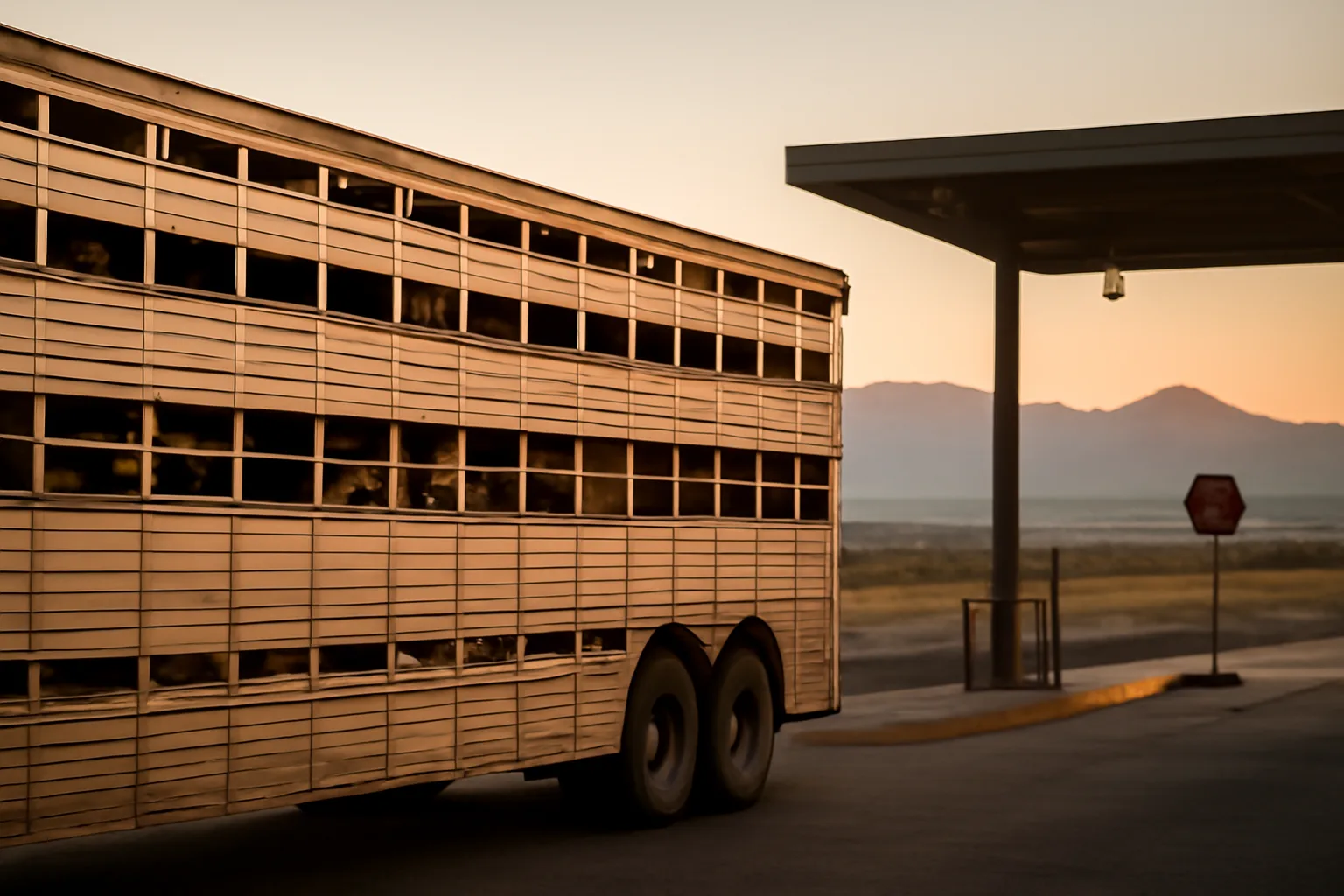
TL;DR
Colorado does not have a standalone livestock hauler board. Instead, you answer to three separate agencies: FMCSA for a USDOT number, USDA APHIS for interstate movement permits, and the Colorado Department of Agriculture for brand inspection. Most operators are road-legal within 4 to 8 weeks if the paperwork moves cleanly.
Do you need a license to haul livestock in Colorado?
Yes, but the word "license" understates what's actually required. Colorado doesn't issue a single livestock hauler license from one central board. You collect several authorizations from separate agencies, and missing any one of them can ground your rig or trigger a federal fine.
Here's the real list. Every for-hire motor carrier hauling livestock interstate needs a USDOT number from the Federal Motor Carrier Safety Administration. If you cross state lines for compensation, you also need operating authority (an MC number) under 49 C.F.R. Part 365 [1]. Intrastate-only haulers in Colorado may avoid the MC number but still need the USDOT number if their gross vehicle weight rating exceeds 10,001 pounds [2].
Beyond FMCSA, the USDA Animal and Plant Health Inspection Service (APHIS) governs the interstate movement of most livestock species under the Animal Health Protection Act (7 U.S.C. § 8301 et seq.) [3]. You don't register with APHIS as a hauler per se, but every load you carry across state lines needs a Certificate of Veterinary Inspection (CVI) or other movement permit that travels with the animals. That burden sits partly on the shipper and partly on you to verify before you leave the yard.
Colorado's own layer is brand inspection. The Colorado Department of Agriculture (CDA) requires a brand inspection certificate for cattle and horses leaving Colorado or changing ownership [4]. As the hauler, you need to have that certificate in the cab before you roll. The CDA also enforces Colorado's livestock movement regulations under Title 35, Article 44 of the Colorado Revised Statutes [5].
So the honest answer is: no single board, no single license, but you will spend real time with FMCSA, USDA APHIS, and CDA before you haul a legal load.
What agencies actually regulate livestock haulers in Colorado?
Three agencies do the heavy lifting, and they don't talk to each other nearly as much as you'd hope.
FMCSA (Federal Motor Carrier Safety Administration) handles your carrier registration, USDOT number, MC number if applicable, and compliance with the Hours of Service rules and the Federal Motor Carrier Safety Regulations. The Unified Registration System (URS) is where all of that happens online [1].
USDA APHIS Veterinary Services governs animal health and interstate movement. Their import/export requirements vary by species and origin state. Colorado is a cooperating state in USDA's animal disease traceability framework, which means cattle moved interstate need official USDA ear tags or other approved identification [3].
Colorado Department of Agriculture, Brand Inspection Program is the state-level authority. Brand inspectors work out of regional offices and are the people you'll interact with most on a day-to-day basis. Cattle, horses, mules, burros, and llamas all require inspection before leaving the state or before a sale. The inspection fee is set by CDA and confirmed periodically; check with CDA directly for the current per-head rate [4].
There is no single "livestock hauler board" in Colorado the way some states have a dedicated licensing board for specific trades. What you deal with instead is a layered regulatory environment where federal law preempts state law on carrier safety, and state law fills in on animal health and ownership verification. Both sets of rules apply simultaneously.
How much does getting set up as a livestock hauler cost in Colorado?
Costs split into federal fees, state fees, insurance premiums, and equipment costs. This section covers only the regulatory and compliance side, not the truck.
| Item | Approximate Cost | Agency |
|---|---|---|
| USDOT number | $0 (free) | FMCSA |
| MC operating authority (if for-hire interstate) | $300 one-time | FMCSA [1] |
| UCR registration (Unified Carrier Registration, annual) | $76 to $973 depending on fleet size | UCR Plan [6] |
| BOC-3 filing (process agent, required for MC authority) | $30 to $75 (third-party filers) | FMCSA requirement |
| Colorado intrastate carrier registration | Confirm with CDOT | CDOT |
| Brand inspection per head | Confirm current rate with CDA | CDA [4] |
| Primary liability insurance (minimum $750,000 for most livestock carriers) | Varies widely by fleet and history | Market |
| Cargo insurance (livestock) | Varies | Market |
The $300 MC filing fee is a federal number set by FMCSA and confirmed in 49 C.F.R. § 360.3 [1]. UCR fees for 2024 run from $76 for a one-truck operation up to $973 for fleets of 3 to 5 vehicles, with higher tiers above that; those rates are set annually by the UCR Board [6].
Insurance is where the real money goes. Federal minimum liability for livestock carriers under FMCSA authority is $750,000 (49 C.F.R. § 387.9), but many shippers and brokers require $1 million. Livestock cargo policies are their own specialty product because animals die in transit in ways that aren't covered by standard freight cargo policies. Expect to get several quotes and expect premiums to depend heavily on your safety score once you've been operating long enough to generate one.
Brand inspection fees are per head and collected at the time of inspection. CDA sets those rates by rule; they are not fixed in statute, so confirm the current schedule directly with the Brand Inspection Program [4].
How long does getting authorized as a livestock hauler take in Colorado?
Plan for 4 to 8 weeks from the day you start the paperwork to the day you can legally move a paying load across state lines. That range assumes you don't hit a snag.
Here's where the time actually goes. The FMCSA application through the Unified Registration System typically processes within 3 to 5 business days for a USDOT number alone. Adding MC operating authority triggers a 10-day protest period during which existing carriers can object to your application; if nobody protests, authority is granted after that window [1]. In practice, protests are rare for new single-truck operators.
After you have provisional authority, you still need to file proof of insurance with FMCSA (your insurer files the MCS-90 and Form BMC-91 or BMC-91X directly) and file your BOC-3 process agent designation. FMCSA won't activate your authority until both filings are confirmed. Getting your insurer to file promptly is usually the actual bottleneck. If your insurer is slow, add another week.
UCR registration is straightforward and can be done online once you have your USDOT number [6]. That's typically same-day.
On the Colorado state side, there's no multi-week licensing process for haulers through CDA. Brand inspections are scheduled per shipment, not as a one-time registration event. What does take time is making sure you understand which loads require a CVI and coordinating that with the livestock owner or their vet before pickup.
If you're adding equipment to an existing authority, the timeline compresses. The first application is the longest because you're establishing everything from scratch.
What insurance do livestock haulers need in Colorado?
Federal law sets the floor. Under 49 C.F.R. § 387.9, for-hire motor carriers transporting livestock in interstate commerce need a minimum of $750,000 in public liability coverage [7]. That's the FMCSA-mandated minimum, and it's proven to be inadequate in serious accident scenarios, which is why most brokers and shippers demand $1 million.
Your insurer files the MCS-90 endorsement directly with FMCSA. You cannot activate your operating authority without that filing in place. The MCS-90 is not optional and it is not a separate policy; it's an endorsement to your primary liability policy that makes FMCSA a party to the coverage.
Livestock cargo insurance is separate and not federally mandated for most carriers, but it is practically mandatory if you want anyone to hire you. Animals are legally cargo, but standard freight cargo policies almost universally exclude livestock because of the perish risk. A livestock-specific cargo policy covers death or injury to animals in transit. Premiums depend on species, load sizes, distances, and your driving history. Nobody publishes a clean average for this because the market is specialized and thin.
Colorado itself does not impose additional insurance minimums on top of the federal floor for licensed carriers, but confirm with CDOT if you're operating intrastate-only under a Colorado authority rather than FMCSA authority, because the state rules may differ.
One thing worth knowing: the MCS-90 creates contingent liability, meaning your insurer pays even if the policy would otherwise exclude the accident, then subrogate against you. It's not protection for you; it's protection for the public. Make sure you understand what your policy actually covers beyond the MCS-90 floor.
What is Colorado's brand inspection requirement for haulers?
Brand inspection is the state-level checkpoint most out-of-state operators underestimate. Colorado Revised Statutes Title 35, Article 44 requires that cattle, horses, mules, burros, and llamas be inspected by a CDA brand inspector before they leave the state or change ownership [5]. As the hauler, you are required to have a valid brand inspection certificate in your cab for any load of these animals.
The CDA Brand Inspection Program operates regional offices across the state. The inspection happens at a sale barn, at the point of origin, or at a designated inspection point depending on the circumstances. You don't schedule this yourself; the livestock owner or shipper typically arranges it. But you're the one on the hook at a roadside stop if the paperwork isn't there.
For loads arriving in Colorado from other states, USDA APHIS import requirements apply. Many states require a CVI from a licensed accredited veterinarian certifying the animals are healthy and meet the destination state's import requirements. Colorado's import requirements by species are published by CDA and USDA APHIS and can change when disease situations evolve, so check the current rules before accepting a load from another state [3].
The practical advice: never pull out of a yard with livestock until you have physically confirmed the brand inspection certificate is in the truck. A missing certificate doesn't just mean a fine; it can mean the load gets turned back, and that's a conversation with the shipper you don't want to have.
What FMCSA rules apply specifically to livestock hauling in Colorado?
FMCSA's regulations for livestock haulers have a few specific wrinkles beyond the standard carrier rules.
Hours of Service (HOS) for livestock haulers includes an agricultural exemption that applies to movements within 150 air miles of the source of the agricultural commodity, under 49 C.F.R. § 395.1(k) [8]. In plain terms: if you're moving cattle from a ranch to a sale barn within 150 air miles, you may be exempt from the standard HOS rules. Beyond that radius or once you leave that operational pattern, standard HOS applies. The exemption covers the driver, not the vehicle, and it covers only the agricultural portion of the trip.
The 28-hour rule for livestock is a federal animal welfare provision under the Twenty-Eight Hour Law (49 U.S.C. § 80502). It requires that livestock in transit be offloaded for feed, water, and rest after 28 consecutive hours of transport. There is an exception if the animals can be fed and watered on the vehicle and the vehicle is equipped for that purpose, in which case the period extends to 36 hours. Sheep can be transported up to 28 hours and then must rest for 5 hours [9].
Commercial Driver's License (CDL) requirements apply when the vehicle's GVWR exceeds 26,001 pounds or when you're hauling hazardous materials. Most livestock trailers loaded pull well over that threshold, so assume a CDL is required. Colorado CDL testing and licensing goes through the Colorado Division of Motor Vehicles [2].
ELD (Electronic Logging Device) mandates apply to most livestock carriers operating in interstate commerce. The short-haul exemption and the agricultural exemption offer some relief in specific situations, but don't assume you qualify; confirm it against your actual operating pattern.
How do you register your livestock hauling business in Colorado?
Carrier registration and business registration are two different things that happen in parallel.
For the business entity, you register with the Colorado Secretary of State if you're operating as an LLC, corporation, or other formal entity [10]. Filing fees for a Colorado LLC start around $50 as of recent filings; confirm the current fee with the SOS directly because these change. A sole proprietor operating under their own legal name technically doesn't need to file with the SOS, but most lenders, brokers, and shippers prefer to work with a formal entity.
For the carrier side, you register with FMCSA through the Unified Registration System at safer.fmcsa.dot.gov [1]. That gets you your USDOT number. If you're operating for hire in interstate commerce, you add the MC authority application at the same time.
Colorado does not have a separate state-level motor carrier registration for interstate carriers because FMCSA authority preempts state registration for that category. For purely intrastate operations (Colorado origin and destination, not crossing state lines), contact the Colorado Public Utilities Commission (COPUC) to understand whether you need intrastate operating authority; Colorado's rules for intrastate-for-hire carriers are distinct from federal rules.
After you have your USDOT and MC numbers, get your UCR registration done for the current registration year [6]. Then file your BOC-3. Then wait for insurance confirmation from FMCSA. Do these in that order and you'll avoid the common mistake of paying for insurance before you have a USDOT number to put on the MCS-90.
What records do Colorado livestock haulers need to keep in the cab?
This is where a lot of newer operators get tripped up at checkpoints. Here's what needs to be physically present or electronically available when you're moving livestock in or through Colorado.
First, your USDOT number must be displayed on both sides of the cab. Second, if you have MC authority, your operating authority registration card or a printed copy of your FMCSA operating authority confirmation. Third, your driver's CDL if the vehicle requires one. Fourth, current insurance card or evidence of financial responsibility. Fifth, ELD display accessible to an inspector if ELD rules apply to your operation. Sixth, the brand inspection certificate for the animals on the truck (for cattle, horses, and other species covered under CRS Title 35, Article 44) [5]. Seventh, a Certificate of Veterinary Inspection if the load is crossing state lines and the species or origin state requires one.
For loads arriving into Colorado from other states, you may also need a state import permit depending on the species and the origin state's disease status. Check USDA APHIS and CDA import requirements before accepting the load.
Keep a manifest that matches the number and description of animals to the inspection certificate. An inspector who finds 47 head on the truck and a certificate for 45 is going to have questions you don't want to answer on the shoulder of I-25.
Where can you find preparation help for the USDA and DOT paperwork path?
Most of the forms and instructions are publicly available from the agencies themselves. FMCSA's Unified Registration System walks you through carrier registration step by step at safer.fmcsa.dot.gov [1]. USDA APHIS publishes import and export requirements by species and state at aphis.usda.gov [3]. The Colorado Department of Agriculture's Brand Inspection Program lists regional office contacts at the CDA website [4].
For new operators who want to bundle the USDA/DOT filing requirements into a single workflow, StockHaulPath publishes a $149 one-time kit that covers the USDA and DOT paperwork path along with a Certificate of Insurance checklist; details are at /start. That's an information product, not a filing service, and it doesn't replace reading the actual agency instructions.
Beyond that, a trucking-specific attorney or a compliance consultant who works with agricultural carriers can review your setup before you start hauling. The Colorado Livestock Association is also a resource for connecting with established haulers who've worked through these requirements [11].
The agencies themselves will answer direct questions. FMCSA has a help line. CDA brand inspection offices are staffed by people who deal with new haulers regularly and are generally willing to explain what you need before you show up with a load.
What happens if you haul livestock in Colorado without the right paperwork?
Fines and detained loads. The consequences are real and they scale with the violation.
FMCSA violations carry civil penalties that run from hundreds to tens of thousands of dollars per violation depending on the category. Operating without a USDOT number, operating without required insurance, or violating HOS rules each carry their own penalty schedules under 49 C.F.R. Part 386 [12]. FMCSA inspectors at commercial vehicle enforcement stations (Colorado has them on major interstates and at ports of entry) can put a vehicle out of service on the spot if violations are serious enough.
Colorado brand inspection violations under CRS Title 35, Article 44 can result in the load being stopped and the animals impounded until inspection can be completed and ownership verified [5]. That's a bad day for you, the shipper, and the animals.
Violations of the Twenty-Eight Hour Law (animal welfare in transit) are enforced by USDA APHIS and carry civil penalties under 49 U.S.C. § 80502 [9]. Historically enforcement has been inconsistent, but USDA has increased attention to livestock transport conditions in recent years.
The practical risk beyond fines is your safety score. FMCSA's Safety Measurement System (SMS) tracks violations against your USDOT number. A poor safety score makes it harder to get broker freight, harder to get insurance at reasonable rates, and can trigger FMCSA intervention. Starting clean and staying clean is genuinely easier than repairing a score.
For neighboring states' requirements that affect Colorado haulers who cross borders regularly, see the guides for livestock hauler board in arizona, livestock hauler board in idaho, and livestock hauler board in california.
Frequently asked questions
Do you need a license for livestock hauling in Colorado?
There's no single livestock hauler license in Colorado. You need a USDOT number from FMCSA (and an MC number if you're for-hire interstate), compliance with Colorado Department of Agriculture brand inspection rules for cattle and horses, and USDA APHIS-compliant movement documents for interstate loads. Those together are your legal operating package. Missing any one of them creates real exposure at a roadside stop.
Is there a Colorado livestock hauler board that issues permits?
No. Colorado does not have a dedicated livestock hauler board. Regulatory authority is split between FMCSA (carrier safety and registration), USDA APHIS (animal health and interstate movement), and the Colorado Department of Agriculture Brand Inspection Program (ownership verification and state movement rules). You deal with all three independently.
How much does it cost to start hauling livestock in Colorado?
The USDOT number is free. MC operating authority costs $300 to FMCSA. UCR registration runs $76 to $973 annually depending on fleet size. A BOC-3 process agent filing typically costs $30 to $75 through a third-party filer. Insurance is the largest variable: primary liability and livestock cargo coverage together can run several thousand dollars per year depending on your operation, history, and fleet size.
How long does it take to get FMCSA operating authority in Colorado?
FMCSA typically processes a new USDOT number in 3 to 5 business days. MC operating authority triggers a mandatory 10-day protest period before it activates. After that, insurance filings and BOC-3 confirmation must clear before your authority is active. Total realistic timeline from first application to active authority is 3 to 4 weeks, but insurance coordination is often the actual bottleneck.
Does Colorado require a brand inspection before hauling cattle?
Yes. Under Colorado Revised Statutes Title 35, Article 44, cattle, horses, mules, burros, and llamas must have a brand inspection certificate before leaving the state or changing ownership. As the hauler, you need that certificate in your cab before you pull out of the yard. The Colorado Department of Agriculture Brand Inspection Program handles scheduling and fees.
What is the minimum insurance for a livestock hauler in Colorado?
Federal law (49 C.F.R. § 387.9) sets the floor at $750,000 in public liability for for-hire carriers hauling livestock in interstate commerce. Most brokers and shippers require $1 million. Livestock cargo insurance is separate and not federally mandated but practically required. Your insurer files the MCS-90 endorsement directly with FMCSA; your authority won't activate without that filing confirmed.
Do livestock haulers in Colorado need a CDL?
If the vehicle's gross vehicle weight rating exceeds 26,001 pounds, a Commercial Driver's License is required. Most loaded livestock trailer combinations exceed that threshold significantly. CDL testing and licensing in Colorado goes through the Colorado Division of Motor Vehicles. FMCSA HOS rules apply once you have CDL-required equipment operating in interstate commerce.
What is the 28-hour rule and does it apply in Colorado?
The Twenty-Eight Hour Law (49 U.S.C. § 80502) requires that livestock be offloaded for feed, water, and rest after 28 consecutive hours of transport. An exception extends the period to 36 hours if animals can be fed and watered on the vehicle. It applies to all livestock transport in interstate commerce, including loads originating in or passing through Colorado. USDA APHIS enforces it.
Do intrastate livestock haulers in Colorado need a USDOT number?
Yes, if the vehicle's GVWR exceeds 10,001 pounds. Most livestock trailers exceed that. Even if you never leave Colorado, the USDOT number is required for vehicles above that weight threshold operating in intrastate commerce. Whether you need separate Colorado intrastate operating authority beyond the USDOT number depends on whether you're for-hire; confirm with the Colorado Public Utilities Commission.
Does the agricultural HOS exemption apply to livestock haulers in Colorado?
It may. Under 49 C.F.R. § 395.1(k), drivers transporting agricultural commodities within 150 air miles of the source are exempt from standard Hours of Service rules. This covers the agricultural leg of the trip, not the whole journey. If you're moving cattle from a Colorado ranch to a local sale barn within that radius, you likely qualify. Beyond 150 air miles, standard HOS applies.
What documents do you need in the cab when hauling livestock in Colorado?
At minimum: USDOT number displayed on the cab, operating authority confirmation if applicable, driver's CDL, current insurance evidence, ELD display if required, brand inspection certificate for the animals on the truck, and a Certificate of Veterinary Inspection for interstate loads where the species and origin state require one. A load manifest matching the inspection certificate headcount is also essential.
How do I find out the current brand inspection fee in Colorado?
The Colorado Department of Agriculture Brand Inspection Program sets per-head fees by rule, and they can change. The current rate is not fixed in statute, so check directly with CDA's Brand Inspection office or the relevant regional office before estimating your operating costs. The CDA website lists regional office contacts for the Brand Inspection Program.
What happens if I haul livestock in Colorado without proper paperwork?
FMCSA violations can result in civil penalties ranging from hundreds to tens of thousands of dollars per violation, and a vehicle can be placed out of service at a roadside inspection. Colorado brand inspection violations can result in the load being stopped and animals impounded. Violations also accumulate against your FMCSA Safety Measurement System score, which affects insurance rates and broker relationships.
Do I need UCR registration if I haul livestock in Colorado?
Yes, if you operate in interstate commerce with a USDOT number. The Unified Carrier Registration is an annual requirement for interstate motor carriers. For 2024, fees run from $76 for single-vehicle operations up to $973 for fleets of 3 to 5 vehicles, with higher tiers above that. UCR is registered online and must be current before you haul interstate loads.
Sources
- FMCSA, Unified Registration System: USDOT number registration, MC operating authority application, $300 filing fee, and 10-day protest period for new carrier authority
- Colorado Division of Motor Vehicles, Commercial Driver's License: Colorado CDL requirements for vehicles exceeding 26,001 pounds GVWR
- Colorado Department of Agriculture, Brand Inspection Program: Colorado brand inspection requirement for cattle, horses, and other livestock leaving the state or changing ownership; per-head fee set by CDA rule
- Colorado Revised Statutes, Title 35 Article 44, Livestock brand inspection: CRS Title 35, Article 44 requires brand inspection for cattle, horses, mules, burros, and llamas before leaving Colorado or changing ownership
- Unified Carrier Registration Plan, Fee Schedule 2024: UCR annual registration fees for 2024: $76 for single-vehicle fleets, $973 for 3 to 5 vehicle fleets, higher tiers above that
- FMCSA, 49 C.F.R. § 387.9, Minimum levels of financial responsibility: Federal minimum public liability coverage of $750,000 for for-hire motor carriers transporting livestock in interstate commerce
- FMCSA, 49 C.F.R. § 395.1(k), Agricultural exemption from Hours of Service: Hours of Service agricultural exemption for movements within 150 air miles of the source of the agricultural commodity
- Colorado Secretary of State, Business Entity Registration: Colorado LLC and business entity registration through the Secretary of State
- Colorado Livestock Association: Industry association resource for Colorado livestock producers and haulers
- FMCSA, 49 C.F.R. Part 386, Rules of Practice for FMCSA Proceedings: Civil penalty schedule for FMCSA violations including operating without USDOT number, operating without required insurance, and HOS violations