Last updated 2026-08-18
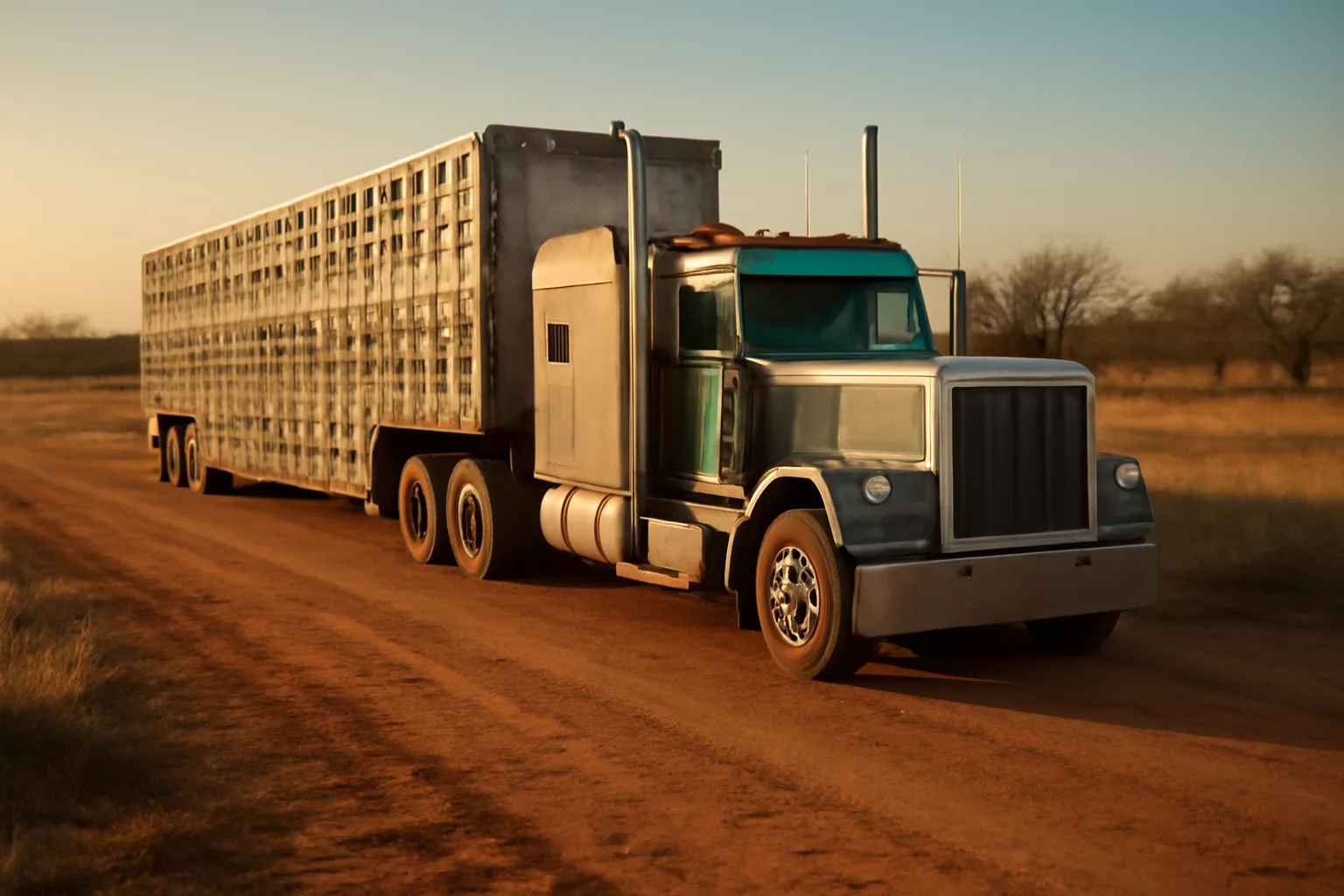
TL;DR
Texas livestock haulers hauling for pay need a USDOT number, usually an FMCSA Motor Carrier number, TxDMV registration, and liability insurance at the federal minimum. No single agency issues a "livestock hauler license." You stack four to six separate registrations instead. Most operators finish the federal filings in one to three weeks. Texas state filings add about another week.
Do you need a license to haul livestock in Texas?
Yes, but "license" is shorthand for a stack of federal and state registrations. Texas issues no single document called a livestock hauler license. What you need depends on your size, whether you cross state lines, and whether you haul for pay or for your own farm.
For-hire carriers hauling livestock commercially almost always need four things: a USDOT number from FMCSA, MC (Motor Carrier) operating authority if you cross state lines or haul regulated commodities for pay, Texas Department of Motor Vehicles (TxDMV) registration for the vehicle, and proof of insurance filed with FMCSA. If you haul only within Texas for your own agricultural operation and your vehicle weighs under 26,001 pounds, you may qualify for an agricultural exemption from certain federal rules. You still need state vehicle registration and a commercial driver's license if the vehicle requires one [1].
Private carriers (farmers hauling their own livestock) get narrower federal exemptions. The FMCSA agricultural exemption under 49 CFR 395.1(k) drops hours-of-service requirements for drivers hauling agricultural commodities within a 150 air-mile radius of the source. That exemption does not drop the USDOT number requirement if your vehicle has a GVWR over 10,001 pounds and you cross state lines [2].
Here is the short version. Hauling livestock for pay anywhere in Texas means you plan on both a USDOT number and MC authority. Purely intrastate and private? Confirm your specific situation with TxDMV and FMCSA before you assume you are fully exempt.
What registrations and filings does Texas require for livestock haulers?
Here is the actual stack most Texas for-hire livestock haulers complete, in roughly the order you should tackle it.
USDOT Number. Apply through the FMCSA Unified Registration System (URS) online. No fee for the number itself. Required if your commercial motor vehicle has a GVWR over 10,001 pounds and runs in interstate commerce, or over 26,001 pounds in intrastate commerce [1].
MC Operating Authority. Required for for-hire interstate carriers. The application fee is $300 per authority type as of 2024, filed through FMCSA [3]. After approval you get a 10-day protest period before authority activates.
BOC-3 Filing. You must name process agents in every state where you operate. Most carriers use a blanket BOC-3 service, which usually costs $20 to $40 one-time through a registered process agent company.
Insurance filings (Form MCS-90 endorsement). Your insurer files proof of financial responsibility directly with FMCSA. For hauling livestock (a non-hazardous commodity), the federal minimum is $750,000 for vehicles over 10,001 pounds [4]. Some brokers and shippers want $1,000,000. Texas sets no higher state minimum for livestock haulers specifically, so the federal floor applies.
TxDMV Registration and Oversize/Overweight permits. Standard commercial vehicle registration goes through TxDMV. If your loaded combination tops 80,000 pounds gross or standard axle limits, you need an oversize/overweight permit. Texas issues single-trip and annual blanket permits for livestock trailers [5].
IRP Apportioned Registration. Running in multiple states means registering under the International Registration Plan through TxDMV's Motor Carrier Division. Fees are apportioned by mileage per state.
IFTA Fuel Tax License. Required for vehicles over 26,000 pounds operating in two or more IFTA jurisdictions. Apply through the Texas Comptroller's office [6].
Commercial Driver's License (CDL). Required if the vehicle combination has a GVWR over 26,001 pounds, or if the trailer alone tops 10,001 pounds and the combination tops 26,001 pounds. Apply through TxDPS. Texas CDL applicants pay a $61 base fee for a Class A license (confirm the current fee with TxDPS, since fees change by legislation) [7].
How much does a livestock hauler license cost in Texas?
There is no single license fee. You are paying several agencies across several months. Here is a realistic breakdown for a single-truck for-hire interstate operator.
| Item | Approximate Cost | Agency |
|---|---|---|
| USDOT number | $0 | FMCSA |
| MC operating authority | $300 | FMCSA [3] |
| BOC-3 blanket filing | $20 to $40 | Process agent company |
| MCS-90 insurance endorsement filing | Included in premium | Your insurer |
| Liability insurance (annual) | $8,000 to $18,000+ | Private insurer |
| TxDMV commercial vehicle registration (varies by weight) | $500 to $2,000+ per year | TxDMV [5] |
| IRP apportioned registration (if multi-state) | Varies by mileage mix | TxDMV Motor Carrier |
| IFTA fuel tax license | $0 to $10 (Texas charges a nominal or no fee) | Texas Comptroller [6] |
| Class A CDL (if needed) | ~$61 base plus testing fees | TxDPS [7] |
| Oversize/overweight permit (if applicable) | $16 single-trip to ~$90 annual blanket | TxDMV [5] |
Insurance is the biggest variable by far. Annual premiums for a single livestock hauling truck run from around $8,000 to over $18,000 depending on the driver's record, the value and type of livestock hauled, the trailer, and the insurer. Nobody publishes clean averages specific to Texas livestock haulers. That range comes from broker quotes and FMCSA market data on small carrier premiums generally. Get at least three quotes before you bind anything.
Total first-year out-of-pocket cost for a single-truck for-hire Texas operator usually falls between $10,000 and $22,000 once you fold in insurance, registration, and federal filings. The federal filing fees are a small slice of that.
How long does getting licensed as a livestock hauler in Texas take?
Expect three to six weeks for the full stack if you move fast and file clean.
FMCSA USDOT registration is often immediate or within one business day through the online URS portal. MC authority takes longer. After FMCSA issues the grant, a mandatory 10-day protest period runs before the authority goes active. If no protests are filed (extremely common for livestock carriers), you get a 20-day window to file your insurance and BOC-3. The authority activates once those filings post, which usually takes two to five business days after your insurer files the MCS-90 [1].
So the FMCSA side alone is roughly two to three weeks under normal conditions.
TxDMV commercial vehicle registration and IRP processing add three to ten business days depending on workload and whether your application is clean. IFTA license processing through the Texas Comptroller usually takes five to ten business days [6].
Your CDL is the wildcard if you do not already have one. Texas CDL applicants must pass a knowledge test, skills test, and medical exam. Scheduling a skills test at a third-party testing site can take two to six weeks depending on your region. DPS does not guarantee appointment availability. Starting from zero on the CDL adds four to eight weeks before you can legally operate.
FMCSA guidance also puts new for-hire carriers under a safety audit within 12 months of receiving authority. That audit does not delay operations. It is a real compliance event you need to be ready for [8].
Does Texas have any state-specific rules for livestock trailers?
Yes, and a few of them catch new haulers off guard.
Texas Transportation Code Chapter 623 governs oversize and overweight permits. Livestock trailers often run at or near legal weight limits, especially cattle doubles. A standard 48-foot livestock trailer loaded with cattle can push 80,000 pounds gross on a five-axle combination, which is the federal interstate limit and also the Texas limit on most highways. Some Texas county roads post lower limits. Damage a county road over its posted limit and you face liability [5].
Texas also sets rules on livestock trailer lighting and ventilation under TxDMV safety regulations, though these mostly track federal FMCSA vehicle inspection standards under 49 CFR Part 393.
Animal welfare in transit is governed federally by the Twenty-Eight Hour Law (49 U.S.C. 80502), which requires that livestock hauled by vehicle be unloaded for rest, water, and feed after no more than 28 consecutive hours of confinement. Texas has no separate state livestock transport welfare law that exceeds the federal standard. The USDA Animal and Plant Health Inspection Service (APHIS) enforces the federal rule, and violations can hit your operating authority [9].
Haul cattle and you deal with the Texas Animal Health Commission (TAHC). TAHC regulates movement of livestock within and into Texas, including health certificates and brand inspection requirements for cattle. Cattle crossing certain county lines or entering Texas from other states need a certificate of veterinary inspection in many cases. This is separate from your carrier authority, but it is part of the daily reality of livestock hauling in Texas [10].
What insurance does a Texas livestock hauler actually need?
Federal minimums are the floor, not the ceiling. For non-hazardous freight (livestock lands here) on vehicles over 10,001 pounds gross, FMCSA requires $750,000 in public liability coverage, filed via Form MCS-90 [4]. That coverage protects the public, not the livestock.
Cargo insurance covering the value of the animals is separate and not federally required, but you want it. If a truck rolls or livestock die in transit from heat, stress, or injury, the shipper can file a claim against you. A typical cargo policy for livestock runs $500 to $2,000 per year for limits of $50,000 to $200,000. Livestock valuation swings wildly depending on whether you are hauling feeder calves or registered breeding bulls worth six figures each.
Many shippers and feedlots in Texas require you to name them as additional insured and show proof of both liability and cargo coverage before they let you load. Set up your certificates of insurance (COI) correctly before you start marketing your services. Getting that COI paperwork organized early saves real time. If you want a pre-assembled checklist of the federal and insurance documents, StockHaulPath's USDA/DOT + COI Kit at /start runs $149 one-time and pulls the required forms into one place.
Physical damage coverage on your truck and trailer is not federally required if you own the equipment outright, but any lender will demand it. Expect physical damage premiums to add $3,000 to $8,000 per year for a typical livestock rig, depending on truck value and deductible.
Do Texas livestock haulers need a CDL, and what class?
If your combination vehicle (truck plus trailer) has a gross vehicle weight rating over 26,001 pounds, you need a CDL. Almost every real livestock hauling rig in Texas clears that threshold. A Class A CDL covers any combination vehicle with a GVWR over 26,001 pounds where the trailer tops 10,001 pounds, which is your standard cattle trailer setup [7].
The CDL process in Texas runs through TxDPS. You need a valid DOT physical (medical examiner's certificate), a Commercial Learner's Permit (CLP) held at least 14 days before the skills test, and passage of the written knowledge tests plus a three-part skills test (pre-trip inspection, basic controls, road test). DPS fees for the CDL application run around $61 for a Class A. You also pay for written test retakes if you need them and for the third-party skills test site, which usually charges $150 to $300.
Plan to haul cattle across scales that require a tandem axle or more, and you should study the combination vehicle and air brakes material. Most livestock trailers have air brakes, so the air brakes knowledge test is almost always in play.
How does FMCSA's new entrant program affect Texas livestock haulers?
Receive MC operating authority and FMCSA automatically enrolls you in the New Entrant Safety Assurance Program. You have 12 months to pass a safety audit, or your authority gets revoked [8].
The safety audit is not a roadside inspection. An FMCSA auditor (or a state safety investigator working on FMCSA's behalf) reviews your records: driver qualification files, hours-of-service logs (or ELD records), drug and alcohol testing program enrollment, vehicle inspection and maintenance records, and accident registers. The audit is pass/fail. Fail and your authority is revoked.
For livestock haulers specifically, the hours-of-service agricultural exemption under 49 CFR 395.1(k) means you may not be running an ELD on qualifying trips. You still need a driver qualification file, a drug and alcohol testing program (if you have employees), and maintenance records. Many new entrant failures happen not because of a real safety problem but because paperwork was missing or a mess. Keep every record from day one.
Texas DPS commercial vehicle enforcement officers run roadside inspections using the FMCSA inspection levels. A Level I inspection on a livestock rig checks driver documents, hours, and vehicle mechanical condition. Inspect livestock trailers regularly. Out-of-service violations on vehicle condition pile up in your FMCSA Safety Measurement System profile and drag down your CSA scores.
What is the Texas agricultural exemption and who qualifies?
Texas follows federal agricultural exemptions with a few state-level wrinkles worth knowing.
Federally, 49 CFR 395.1(k) exempts drivers from hours-of-service rules when hauling agricultural commodities (including livestock) within a 150 air-mile radius of the source farm or ranch, during planting and harvest seasons as set by the state. Texas has not published a narrow seasonal window. TxDPS and FMCSA treat Texas as having a year-round agricultural season for practical purposes, so the 150-mile HOS exemption applies throughout the year in Texas [2].
One thing to be clear on: the HOS exemption does not exempt you from USDOT number requirements, CDL requirements, drug and alcohol testing if you employ drivers, or vehicle inspection requirements. It only drops the hours log requirement on qualifying trips.
Intrastate private carriers hauling only their own livestock in Texas may find TxDMV registration categories that cut fees. Check with TxDMV's Motor Carrier Division directly, since farm registration plates carry specific eligibility rules based on what commodities you haul and whether you haul for pay.
Do not assume a farm truck exemption fits your situation without confirming with TxDMV. Auditors and officers see misapplied exemptions constantly.
What are the brand inspection and TAHC movement rules Texas haulers face?
This section covers state livestock law, not carrier licensing, but it is the thing that actually stops trucks at scales and sale barns.
Texas is a mandatory brand inspection state for cattle. Under Texas Agriculture Code Chapter 146, cattle moving from a Texas ranch to any point of sale, slaughter, or out of state require a brand inspection. The Texas and Southwestern Cattle Raisers Association (TSCRA) Brand Inspectors and TAHC enforce this. If you are hauling cattle commercially, your shipper should handle the brand inspection paperwork, but you as the driver need it on the truck [10].
The Texas Animal Health Commission regulates movement of swine, equine, sheep, goats, and other livestock into Texas from other states, requiring certificates of veterinary inspection (health certificates) in many cases. Rules shift based on the disease status of the origin state, so check TAHC's current requirements before each out-of-state haul [10].
Federal APHIS import and export rules layer on top of TAHC rules for international movements. Ever haul livestock to or from Mexico and you are in a separate regulatory universe involving USDA APHIS Port Veterinarians.
The practical lesson is simple. Get the paperwork from your shipper before you leave the yard. Stopped at a weigh station or sale barn without proper livestock movement papers, you eat delays that cost more than the inspection fees.
How should a new Texas livestock hauler sequence their filings?
The order matters more than most people realize. Here is the sequence that avoids wasted effort.
First, get your DOT physical and lock in your CDL status. Everything else rides on your ability to legally drive the vehicle. No CDL? Start there. Getting your medical examiner's certificate uploaded to the FMCSA National Registry is also a prerequisite for registering as a carrier.
Second, register your business entity (LLC or other structure) with the Texas Secretary of State and get a federal EIN. You cannot file for USDOT or MC authority without a legal entity and EIN.
Third, apply for your USDOT number through FMCSA's URS portal. Free, and often same-day.
Fourth, if you need MC authority, file that through URS at the same time or right after. Pay the $300 fee [3]. Start shopping for insurance now, because your insurer needs your USDOT and MC numbers to file the MCS-90.
Fifth, hire a BOC-3 process agent service and have them file your blanket designation.
Sixth, once your MCS-90 and BOC-3 post to FMCSA's system, your authority activates. This usually happens within two to five business days of filing.
Seventh, handle TxDMV commercial vehicle registration, IRP apportionment, and the IFTA license. These can run in parallel with the FMCSA steps once you have your USDOT number.
Eighth, enroll in a DOT drug and alcohol testing consortium if you have drivers other than yourself, or even as a single owner-operator. FMCSA requires owner-operators to enroll in a consortium with random testing [11].
Want the USDA/DOT + COI Kit that bundles the required forms and filing checklist into one download? StockHaulPath offers it at /start for $149 one-time. That is the only optional purchase in this process. Every other step listed above is a regulatory requirement.
Frequently asked questions
Do you need a license to haul livestock in Texas if you only haul your own cattle?
Private carriers hauling only their own livestock may qualify for exemptions from some FMCSA requirements, particularly hours-of-service rules within 150 air miles of the source under 49 CFR 395.1(k). You still need a USDOT number if your vehicle tops 10,001 pounds GVWR and runs interstate, a CDL if the combination tops 26,001 pounds, and standard TxDMV vehicle registration. Confirm your specific situation with TxDMV and FMCSA before operating.
How much does it cost to get a livestock hauler authority in Texas?
Federal FMCSA operating authority costs $300 per authority type. Add a BOC-3 blanket process agent filing at $20 to $40, TxDMV commercial vehicle registration at roughly $500 to $2,000 per year depending on weight, and a Class A CDL at around $61 base fee plus testing costs. Liability insurance is the largest expense: expect $8,000 to $18,000 per year for a single truck. Total first-year costs commonly range from $10,000 to $22,000.
How long does it take to get a USDOT number and MC authority in Texas?
A USDOT number through FMCSA's URS portal is usually issued same-day or within one business day. MC operating authority carries a mandatory 10-day protest period after FMCSA's grant, then activates within two to five business days once your MCS-90 insurance and BOC-3 filings post. The full FMCSA process usually takes two to three weeks. TxDMV registration and IFTA licensing add another five to ten business days.
What CDL class do Texas livestock haulers need?
A Class A CDL covers any combination vehicle with a GVWR over 26,001 pounds where the trailer tops 10,001 pounds, which describes nearly every commercial livestock rig. You also need the air brakes endorsement if your trailer has air brakes, which most livestock trailers do. Texas CDL applications go through TxDPS. The base Class A application fee is around $61, plus third-party skills test fees of $150 to $300.
Does Texas require oversize or overweight permits for livestock trailers?
Yes, if your loaded combination tops 80,000 pounds gross or standard axle limits under federal and Texas law. Texas Transportation Code Chapter 623 governs these permits, issued by TxDMV. A single-trip permit costs around $16. Annual blanket permits for livestock haulers cost roughly $90 and are available for vehicles that regularly run at over-legal dimensions or weights. County road weight limits may be lower than state highway limits.
What is the federal minimum insurance for a livestock hauler in Texas?
FMCSA requires $750,000 in public liability coverage for non-hazardous freight carriers operating vehicles over 10,001 pounds, filed via Form MCS-90 with your insurer. This covers injury to the public, not the livestock themselves. Cargo insurance protecting the animals is separate and not federally required but is expected by most shippers and feedlots. Some brokers require $1,000,000 in liability regardless of the federal minimum.
Do Texas livestock haulers need to follow the Twenty-Eight Hour Law?
Yes. The Twenty-Eight Hour Law (49 U.S.C. 80502) requires that livestock hauled by vehicle be unloaded for rest, water, and feed after no more than 28 consecutive hours of confinement. USDA APHIS enforces this federally. Texas has no stricter separate state law. Violations can hit your FMCSA operating authority and bring civil penalties. Keep records of loading, transit, and unloading times on each haul.
What is FMCSA's new entrant safety audit and when does it happen?
When you receive MC operating authority, FMCSA enrolls you in its New Entrant Safety Assurance Program. An auditor reviews your records within 12 months: driver qualification files, hours-of-service records or ELD data, drug and alcohol testing program, vehicle inspection reports, and accident register. Failing means authority revocation. Livestock haulers using HOS agricultural exemptions still need all other records organized. Keep every file from day one.
Do I need to register for IFTA as a Texas livestock hauler?
Yes, if your commercial vehicle has three or more axles, or a GVWR over 26,000 pounds, and you operate in two or more IFTA jurisdictions. Apply through the Texas Comptroller's office. The license is usually free or very low cost in Texas. You then file quarterly fuel tax reports allocating fuel purchases and miles by state. Haul only within Texas and IFTA does not apply.
Does Texas require a brand inspection when hauling cattle?
Yes. Under Texas Agriculture Code Chapter 146, cattle moving from a Texas ranch to any point of sale, slaughter, or out of state require a brand inspection. TSCRA Brand Inspectors and the Texas Animal Health Commission enforce this. As the carrier, you are responsible for having the inspection paperwork on board during transit. Your shipper should provide it, but confirm before leaving the yard.
Can I haul livestock in Texas without MC authority if I am only intrastate?
Possibly. Purely intrastate for-hire carriers do not need FMCSA MC operating authority, since MC authority governs interstate commerce. You still need a USDOT number if your vehicle meets the weight threshold, TxDMV registration, and applicable Texas commercial carrier permits. Intrastate-only operations are regulated by TxDMV's Motor Carrier Division rather than FMCSA for operating authority purposes. Confirm your specific operation type with TxDMV.
How do I enroll in a DOT drug and alcohol testing program in Texas?
FMCSA requires all commercial motor vehicle operators subject to CDL requirements to participate in a drug and alcohol testing program under 49 CFR Part 382. Owner-operators must join a consortium that conducts random testing on their behalf. Many third-party administrators offer Texas-based consortium enrollment for $100 to $200 per year. You need pre-employment drug testing before a driver operates a CMV and must keep records of all testing.
What records does a Texas livestock hauler need to keep on the truck?
At minimum: your CDL, medical examiner's certificate, current registration and IRP cab card, IFTA decal, proof of insurance (COI or MCS-90 copy), any required permits (oversize/overweight), and livestock movement paperwork (brand inspection certificate, health certificates where required). On multi-day trips, hours-of-service logs or ELD data must be on board unless you are operating entirely within an applicable agricultural exemption window.
Sources
- FMCSA, Unified Registration System overview and USDOT number requirements: USDOT number required for commercial motor vehicles over 10,001 pounds GVWR in interstate commerce; registration is free and online through URS
- FMCSA, 49 CFR 395.1(k) agricultural exemption from hours-of-service rules: Drivers transporting agricultural commodities including livestock within 150 air miles of the source are exempt from hours-of-service requirements under 49 CFR 395.1(k)
- FMCSA, Operating Authority (MC Number) application and $300 fee: MC operating authority application fee is $300 per authority type, filed through FMCSA's Unified Registration System
- FMCSA, Minimum Levels of Financial Responsibility for Motor Carriers, 49 CFR Part 387: Federal minimum public liability insurance for non-hazardous freight carriers operating vehicles over 10,001 pounds is $750,000, filed via MCS-90 endorsement
- Texas Comptroller of Public Accounts, International Fuel Tax Agreement (IFTA) license: Texas IFTA license is required for qualifying commercial vehicles operating in multiple IFTA jurisdictions; Texas issues the license through the Comptroller's office
- Texas Department of Public Safety, Commercial Driver License program and fees: Texas Class A CDL application fee is approximately $61 base; applicants must hold a Commercial Learner's Permit for at least 14 days before the skills test
- FMCSA, New Entrant Safety Assurance Program: New motor carriers receiving MC authority are subject to a safety audit within 12 months; failure results in authority revocation
- Texas Animal Health Commission, livestock movement regulations and brand inspection requirements: TAHC regulates livestock movement into and within Texas including health certificates; brand inspection required for cattle moving to sale, slaughter, or out of state under Texas Agriculture Code Chapter 146
- FMCSA, 49 CFR Part 382, Controlled Substances and Alcohol Use and Testing: Owner-operators subject to CDL requirements must participate in a drug and alcohol testing consortium under 49 CFR Part 382 with mandatory random testing