Last updated 2026-08-21
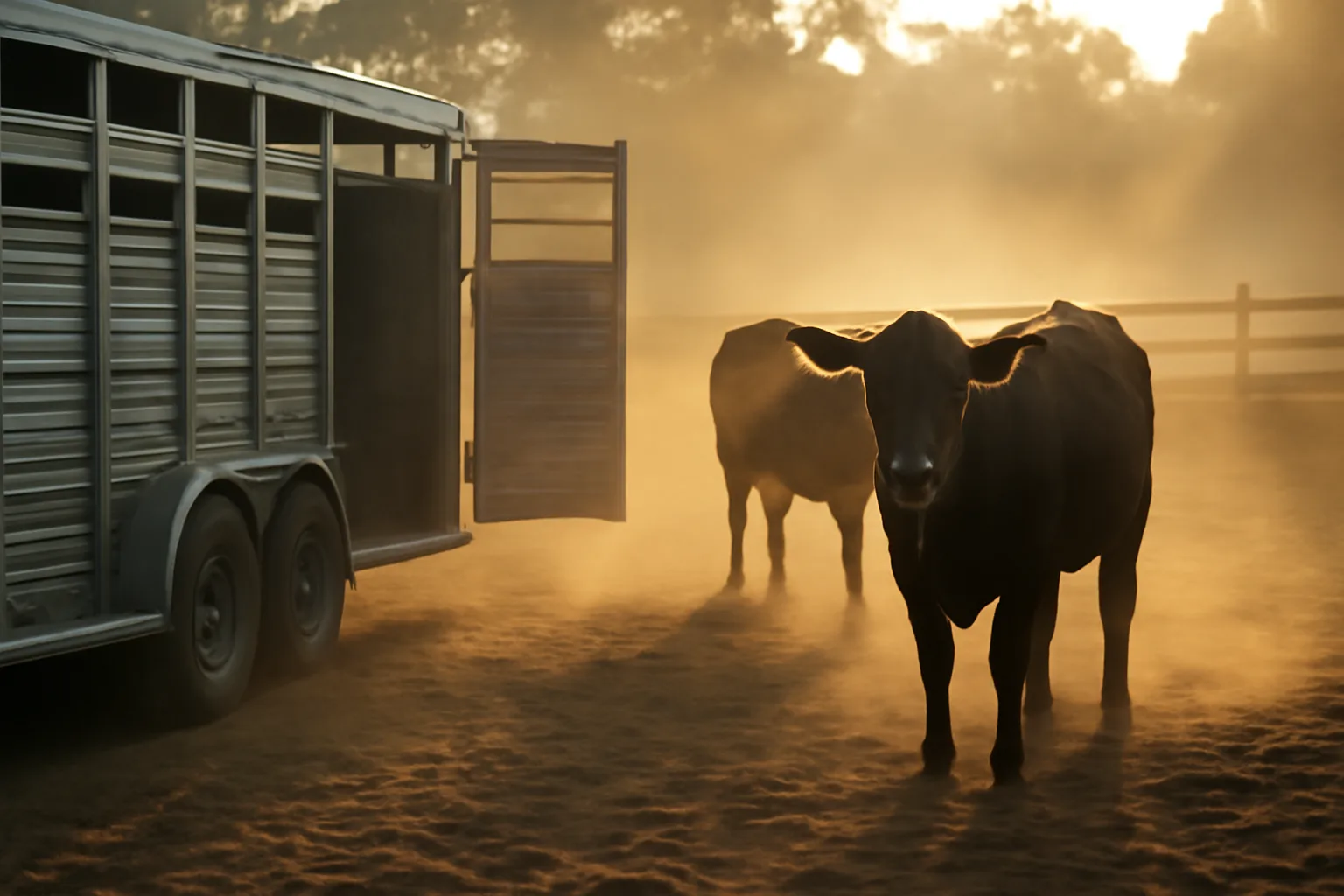
TL;DR
Starting a livestock hauler in Florida means stacking federal carrier paper, a Florida business filing, the right license class, insurance filings, and animal health documents. No single state livestock hauler card exists. Interstate for-hire work needs USDOT and MC authority. Combinations at 26,001 pounds need a CDL. Budget the truck first. Confirm fees with FMCSA, FLHSMV, Sunbiz, and FDACS.
Do you need a license for a livestock hauler in Florida?
You need several credentials, not one statewide livestock hauler license. For-hire interstate work needs a USDOT number and MC authority from FMCSA. Combinations at 26,001 pounds or more need a CDL. Florida still wants animal health papers on many loads.
People keep hunting for a livestock hauler Florida card they can hang on the visor. That single permit does not exist here. You still cannot hook a pot to a farm truck and take a stranger's steers to Georgia for a check.
Haul other people's animals for pay across a state line and you are a for-hire motor carrier. That means a USDOT number and operating authority (an MC number) from FMCSA. [1][2] Haul only your own cattle to your own sale and the for-hire piece may not apply. Safety rules and animal health rules still can.
Weight is the other trigger. A combination rated at 26,001 pounds or more, with a trailer over 10,000 pounds, needs a Class A CDL. [15][7] A dually and a short gooseneck can stay under that line if the ratings are honest. A tractor and a cattle pot will not.
On top of carrier paper, Florida's animal industry statute lets the Department of Agriculture and Consumer Services require an official certificate of veterinary inspection or other official document when animals move into, within, or from the state. [5] That is load paper, not a hauler license. It still stops you at a checkpoint.
Treat this as a stack. File the business. Get the federal numbers if you are for hire. Get the right license class. Call an accredited vet before you advertise lanes. If you want to see a neighboring state that actually prints a livestock-specific license path, read how to start a livestock hauler in Alabama and compare it to Florida's quieter setup.
Confirm live requirements with FMCSA, FLHSMV, and FDACS. This page is a map, not a permit.
How much does a livestock hauler cost in Florida?
First-year government paper for a one-truck livestock hauler in Florida usually runs in the hundreds to the low thousands. The truck, trailer, and insurance dwarf those filings. Nobody publishes a clean Florida average premium I trust.
Here is the paper you can pin to a source. Florida LLC articles of organization cost $125 to file with the Division of Corporations. Confirm that posted figure on the Sunbiz LLC page before you pay, because boards change forms. [6] FMCSA charges an application fee for operating authority. Confirm the live amount on the FMCSA registration page. [2] Unified Carrier Registration is an annual federal fee that scales with fleet size. Confirm this year's bracket with the UCR program, not with a blog post from two seasons ago.
IFTA and IRP only hit you if you run a qualifying truck across state lines. [13][14] Intrastate Florida plates are a different conversation with FLHSMV.
The real check is equipment. A used one-ton and a sound gooseneck can start in the mid five figures if you shop hard and pay for a lift inspection. A road-ready daycab and a used potbelly is a different budget. Those are market prices, not posted fees. They move with steel, cattle, and interest rates.
Insurance is the ugly variable. FMCSA requires $750,000 in public liability for for-hire property carriers in vehicles of 10,001 pounds or more. [3] That is a coverage floor, not your invoice. A new authority with a thin resume pays more. Livestock cargo and sometimes mortality coverage sit on top if a shipper asks.
Spend money in this order. Business filing. Authority and insurance quotes, same week. Then a used truck you can inspect. I would not finance a new cattle pot until I had repeat freight.
Compare the Texas cost stack if you also run west. Livestock hauler cost in Texas is a useful cross-check, not a price list you can copy into a Florida bid.
CDL school is optional. Florida lets you get a commercial learner's permit and train. Third-party skills tests charge their own fees. Confirm current FLHSMV license fees on the department site. [7] I would not prepay a multi-thousand-dollar school until I knew I could pass a DOT physical and a Clearinghouse check.
Want the federal forms and a sample certificate of insurance checklist in one packet? StockHaulPath sells a $149 one-time USDA/DOT + COI kit. It does not file for you and it is not legal advice.
| Cost bucket | What you can pin down | What I'd budget mentally |
|---|---|---|
| Government filings (LLC, MC, UCR) | $125 LLC is posted. Other fees change. Confirm. | Low thousands once plates and fuel permits land |
| CDL path | FLHSMV fees plus any school or third-party test | A few hundred if you self-train, more if you buy a course |
| Liability insurance | $750,000 is the FMCSA floor, not the premium [3] | Shop three brokers. Do not guess. |
| Truck and trailer | Market, not a statute | This is the business. Paper is not. |
How long does it take to start a livestock hauler in Florida?
The Florida LLC can come back quickly online. Federal operating authority, insurance filings, a CDL, and a truck you trust take longer, and none of those clocks are yours to set. Do not book a paid load on a hoped-for date.
Sunbiz online filings often show a status in a short window. That is the only step I would call fast, and even that runs on the Division of Corporations' clock, not mine. Confirm current processing on the Sunbiz site when you file. [6]
FMCSA operating authority is slower on purpose. You file, you designate process agents, you get insurance on file, and there is a protest window baked into the authority process. [2] FMCSA publishes its own status tools. Use those. Anyone who promises you a day count is selling something.
The CDL path is on you and FLHSMV. You need a medical certificate, a commercial learner's permit, practice, and a skills test. [7] Some people finish in a few weeks. Some people fail a pre-trip and start over. Schools do not control the examiner.
Insurance can be days if your record is clean and a broker already knows livestock. It can be weeks if you have gaps, a young driver, or a dump-truck loss on the same authority. No honest writer can quote a Florida livestock mean, because the data is not public.
After you go active interstate, FMCSA still runs a new entrant monitoring program under 49 CFR 385 Subpart D. Plan on a safety audit in that first stretch. Confirm the current window with FMCSA. [10]
File the entity and start the federal application before you sign a truck note. Parallel paths save calendar time. They do not create a guarantee.
What federal USDOT and MC paper do you file first?
File for a USDOT number if you operate a commercial motor vehicle in interstate commerce at 10,001 pounds or more. File for MC authority if you haul other people's livestock for pay across a state line. Those are different numbers and they do different jobs. [1][2]
FMCSA's own test is blunt. You need a USDOT number when you haul cargo in interstate commerce in a vehicle (or combination) at 10,001 pounds GVWR, GCWR, GVW, or GCW. [1] A lot of Florida ranch trucks already sit over that line once you add a loaded stock trailer.
MC authority is the for-hire piece. Getting an MC number is how FMCSA grants operating authority to carry other people's property in interstate commerce. [2] Brokers will ask for it. Sale barns that pay a third-party truck will ask for it. Hauling your own cows is not the same fact pattern.
Never leave Florida and you may not need interstate MC authority. You may still need a USDOT number under the commercial vehicle rules Florida applies to in-state trucks. Confirm that split with FMCSA and FLHSMV before you tell a shipper you are "legal." Do not take my word as a ruling.
You will also designate process agents on a BOC-3, get the right insurance forms on file, and register for UCR when you are required to. Those steps attach to authority. They are not optional decorations.
Do USDOT and the MC application in the same sitting if you know you are for hire and interstate. Then call insurance, not a vinyl shop. For the Texas version of this stack, see livestock hauler license in Texas.
Do you need a CDL to haul livestock in Florida?
You need a CDL when the truck or combination meets federal commercial motor vehicle thresholds, most often 26,001 pounds GCWR with a trailer over 10,000 pounds. A small gooseneck under those ratings can stay on a regular license. A potbelly on a tractor cannot. [15][7]
Florida issues commercial learner's permits and CDLs through FLHSMV. Class A is the combination class. That is what almost every tractor and cattle trailer pair needs. [7] Class B is a single vehicle at 26,001 pounds or more. A straight livestock box can land there.
Federal classification lives in 49 CFR 383.91. The Class A line is a combination with a GCWR of 26,001 pounds or more, if the trailer being towed is over 10,000 pounds. [15] People get cute with door stickers. Examiners and troopers read the manufacturer ratings and the loaded scale ticket.
You also need a valid medical certificate and, once you are in the CDL world, a Clearinghouse account. A failed or refused drug test follows you. I would not put a deposit on a trailer until I knew my medical and Clearinghouse status were clean.
Can you build a first-year business under the CDL line? Yes, if you stay local, buy a true light combination, and refuse to let a shipper talk you into 80,000-pound loads. I'd rather start that way than fake a farm-tag story on a for-hire lane.
Confirm endorsements and test sites with FLHSMV. Fees and third-party tester prices change. [7]
What animal health papers does Florida want on a livestock load?
Many interstate cattle, swine, sheep, goat, and equine moves need an interstate certificate of veterinary inspection and official ID. Florida can also require an official certificate of veterinary inspection or other official document for animals moving into, within, or from the state. Call an accredited vet before you book the pickup. [5][11]
This is the part new truckers skip, then learn about at a scale or a sale barn. Carrier authority does not replace animal health paper. A clean MC number will not fix a missing Coggins or a calf with no official ID.
Florida Statute 585.145 gives FDACS control over animal disease movement and lets the department require official veterinary documents on animals moving into, within, or from the state. [5] The exact test and timing sit in department rules and change with disease traces. Confirm the current species sheet with FDACS, not with the last load you ran in 2022.
Interstate cattle also fall under USDA Animal Disease Traceability rules in 9 CFR part 86. Covered cattle moving interstate generally need official identification and an interstate certificate of veterinary inspection, with listed exceptions. [11] APHIS publishes the interstate movement rules. Read the species you actually haul.
Horses are their own headache. Equine infectious anemia testing (Coggins) is standard on almost every horse move people will pay you for. Do not guess. Get the current FDACS equine sheet.
Keep a folder in the truck: ICVI or OCVI, owner statement, owner PIN or premises info if they have it, and a simple count by sex and class. The vet writes the health paper. You keep it with the load.
Brand inspection is not Florida's main event the way it is out west. Florida records brands under chapter 534, but it is not a Texas-style inspection gate on every sale. Run into Alabama or Texas and you learn their paper fast. Start with livestock hauler license in Alabama if that lane is real for you.
What insurance and filings come before the first paid mile?
You need public liability insurance at FMCSA's published floor before interstate for-hire authority goes active, plus whatever a shipper writes into the contract. The federal floor for nonhazardous property in a 10,001-pound vehicle is $750,000. That is not a quote. [3]
49 CFR 387.9 states that "The minimum levels of financial responsibility referred to in § 387.7 are hereby prescribed as follows," and the schedule lists $750,000 for for-hire property that is not hazardous in freight vehicles of 10,001 pounds or more GVWR. [3] Your broker may still want $1 million because that is what their shipper form says. Argue after you can pull a load.
FMCSA wants the right BMC form on file, not a blurry photo of a personal auto card. Cargo coverage is separate. Some cattle owners will ask about mortality or a named-peril livestock form. I would not buy exotic mortality on day one unless a contract pays for it.
Physical damage on the truck is your lender's problem if there is a lien. Own the truck outright and it is still stupid to run naked in Florida rain and I-75 traffic. That is an opinion, not a statute.
Shop livestock-aware agencies, not the same person who writes a landscaping van. Bring your MVR, the truck list, and an honest description of lanes (sale barn, ranch to feedyard, packer). Lie about radius and you will meet that lie at claim time.
Confirm current filing forms with FMCSA when you apply. [2][3]
How do Florida plates, IFTA, and IRP work for livestock trucks?
A truck that never leaves Florida can often stay on Florida commercial plates. A qualifying truck that crosses state lines usually needs IRP apportioned plates and an IFTA fuel license. Farm tags are not a loophole for for-hire livestock. Confirm your fact pattern with FLHSMV and Florida DOR. [14][13]
IRP is how member jurisdictions split registration fees when a fleet actually travels in more than one jurisdiction. Florida's IRP program sits at FLHSMV. [14] If your only customer is a ranch in Okeechobee and a sale in Kissimmee, you may not need it. Start taking Georgia and Alabama barns and you do.
IFTA is the fuel tax compact. Florida DOR administers it here. [13] Qualifying vehicles are generally the heavier ones (think the 26,000-pound class, or three axles) that leave the state. A gas dually that truly stays home is a different animal. Do not invent a permit you do not need, and do not skip one you do.
I would not put farm plates on a truck I advertised as "for hire livestock transport." Florida farm classifications exist for farm use. Paid hauling of other people's animals is motor carrier work. Troopers can tell the difference when your phone is full of dispatch texts.
Base plate first, then add IFTA and IRP when the miles are real. Keep fuel receipts. IFTA audits are boring until they are not.
If your lanes already point west, read how to start a livestock hauler in Texas before you promise a customer a through rate.
What are the 28-hour law and the agricultural hours rules?
Federal law bars confining animals more than 28 consecutive hours without unloading them for feed, water, and rest, unless a lawful exception applies. Hours-of-service rules are a separate driver clock, and livestock can qualify for a 150 air-mile agricultural commodity exception. Heat in Florida will punish you sooner than either rule. [4][8][9]
49 U.S.C. 80502 says a common carrier "may not confine animals in a vehicle or vessel for more than 28 consecutive hours without unloading the animals for feeding, water, and rest." [4] Owners can request an extension to 36 hours in writing. I would not plan a Florida summer run around that extension. Cattle cook.
Driver hours live in 49 CFR 395. There is an agricultural commodity exception. FMCSA's guidance applies the exception to transportation of agricultural commodities within a 150 air-mile radius of the source. [8][9] Livestock counts as an agricultural commodity for that exception. The exception is not a free pass on animal care, unsafe driving, or every other FMCSR.
Leave that radius and the regular HOS clock matters, with ELD rules following the same federal pattern as any other truck. Confirm current exception language with FMCSA before you tell a shipper you "don't do logs." [9]
Run night loads in July, carry water, and pick rest points before you leave the barn. The 28-hour statute is the floor. A dead heifer on I-10 is the real penalty.
What equipment should you buy in year one?
Buy a used truck you can inspect and a trailer that matches the species you can actually book. I would not buy a new potbelly on a new authority. The first year is for learning sale-barn timing, not for making a dealer whole.
A one-ton and a 24-foot gooseneck will do pairs, show stock, and small ranch jobs. Stay honest about ratings if you want to stay off a CDL. A daycab and a used pot will do fat cattle if you have a CDL, authority, and a customer who pays on time.
Look at floors, gates, welds, and roof vents. Florida rain plus manure will find every hole. A cheap trailer with rotten wood is not cheap. Spend money on a lift inspection and tires before you spend it on lights that spell the company name.
Sorting gates, a decent ramp, and a water plan matter more than a custom paint job. So does a way to wash the trailer. Sale barns notice a filthy pot.
Skip the $20,000 trailer toys until the books work. Skip a second truck. Skip the idea that a reefer box is "close enough" for cattle.
Run Tennessee or Arkansas barns later and the equipment story stays the same even when the license story does not. How to start a livestock hauler in Arkansas is worth a look for the paper contrast, not for shopping a trailer.
How do you set up the Florida business so you can get paid?
File a Florida LLC (or corporation) with the Division of Corporations, get an EIN from IRS, open a bank account that is not your personal checking, and ask your county tax collector about a local business tax receipt. Shippers pay legal names, not nicknames on a door. [6]
The posted fee to file Florida LLC articles of organization is $125 on the Sunbiz LLC page. Confirm it when you file. [6] Annual reports are a separate later bill. Miss the annual report and the state will dissolve you while you are sitting at a packing plant.
An EIN is free from IRS. Do not pay a random website for one. The bank will want the Sunbiz document, the EIN letter, and your ID. That account is where sale-barn checks should land.
Florida still uses local business tax receipts in many counties and cities. That is a tax collector question, not an FMCSA question. Call the county where the truck sleeps before you print invoices.
Write a simple rate sheet. Per loaded mile, per head, or a flat barn-to-barn number. Livestock is not dry van. Detention at a slow chute is real. Put a wait fee in writing.
I would not run the first six months on handshake texts only. A one-page haul agreement with owner name, count, origin, destination, and who pays vet paper will save you one ugly night.
For another state's entity-plus-license stack, livestock hauler license in Tennessee shows how much heavier some states get on the livestock-dealer side.
What happens after you get authority, and what is a waste of money?
After interstate authority goes active you still have a new entrant monitoring period, a safety audit, UCR, biennial MCS-150 updates, drug testing if you are in the CDL world, and the daily trip paper. Getting the MC number is the start of the job, not the end. [10][2]
FMCSA's new entrant rules live in 49 CFR 385 Subpart D. [10] Have a driver qualification file, maintenance file, and a way to show HOS compliance even when you think an ag exception applies. Auditors ask for records, not stories.
Waste of money, in my view: a new cattle pot on a two-week-old authority. A full wrap on a rusty trailer. Dispatch software with a monthly fee when you have three customers. Paying a middleman to "get you a DOT number" that you can file yourself. Buying mortality insurance for a load the owner already covers. A CDL school you cannot finish because you have not passed the physical.
Not a waste: a good broker who understands livestock, a lift inspection, a spare tire that fits, and an accredited vet who will answer the phone on Sunday.
Keep the brand in its place. StockHaulPath is an independent publisher, not a law firm and not a filing service. Use the kit at /start only if you want the packet. Call FMCSA, FLHSMV, Sunbiz, Florida DOR, and FDACS for live fees and forms. Nobody here can promise an approval or a date.
Frequently asked questions
Do you need a license for livestock hauler in Florida?
You need a stack of credentials, not one Florida livestock hauler card. Interstate for-hire work needs a USDOT number and MC authority from FMCSA. Combinations at 26,001 pounds need a CDL from FLHSMV. Many loads also need veterinary movement papers under FDACS and USDA rules. Confirm each item with those agencies before you advertise.
How much does livestock hauler cost in Florida?
Posted paper is small next to the truck. Florida LLC articles are listed at $125 on Sunbiz. Confirm FMCSA authority and UCR fees when you file. The $750,000 FMCSA liability figure is a coverage floor, not a premium. Used trucks and trailers sit in market ranges that move. Shop insurance. Do not copy someone else's bid.
How long does livestock hauler take in Florida?
The LLC can be fast online. MC authority, insurance filings, a CDL, and finding a sound truck take longer. FMCSA builds a protest and insurance-filing sequence into authority. CDL timing depends on you and FLHSMV. Confirm live processing with each board. Do not promise a shipper a start date you do not control.
Can I haul livestock in Florida without a CDL?
Yes, if the truck and trailer stay under federal CMV thresholds, most often under 26,001 pounds GCWR with a trailer that is not over 10,000 pounds. Read the door ratings, not the seller's ad. A tractor and pot need a Class A. You still need animal papers and, if you are for hire interstate, carrier authority.
Do I need an MC number for in-state only hauls?
Interstate MC authority is for for-hire loads that cross a state line. A true Florida-only operation may not need that MC. You may still need a USDOT number on a commercial truck. Brokers often demand an MC anyway. Confirm your fact pattern with FMCSA. Do not treat a Facebook comment as a ruling.
What is an official certificate of veterinary inspection in Florida?
It is the accredited veterinarian's official health document for the animals on the load. Florida Statute 585.145 lets FDACS require an OCVI or other official document when animals move into, within, or from the state. Interstate moves often also need an ICVI and official ID under USDA rules. The vet writes it. You carry it.
Does the 28-hour law apply to a Florida ranch truck?
49 U.S.C. 80502 applies to common carriers confining animals in a vehicle for more than 28 consecutive hours without unloading for feed, water, and rest. A true haul of your own animals is a different fact pattern than a for-hire carrier move. Florida heat still kills animals faster than the statute. When in doubt, unload sooner and ask counsel about your exact status.
Do I need IFTA for a single-state Florida truck?
Usually no, if the truck never leaves Florida and you are not in IRP. IFTA is for qualifying vehicles that cross member jurisdictions. Florida DOR runs the IFTA program. A heavy truck that starts taking Georgia or Alabama barns will likely need IFTA and IRP. Confirm with DOR and FLHSMV before the first out-of-state mile.
What insurance filings does FMCSA want?
For interstate for-hire property in a 10,001-pound vehicle, 49 CFR 387.9 sets public liability at $750,000 for nonhazardous freight. FMCSA wants the proper BMC insurance filing, not a personal auto card. Shippers may demand higher limits or cargo. Confirm current form names on the FMCSA registration and insurance pages when you apply.
Can I start with a gooseneck and a dually?
Yes, and that is how I would start if I did not already have cattle contracts. Stay honest about weight ratings if you want to avoid a CDL. You can still need a USDOT number and, if you cross a state line for hire, MC authority. Match the trailer to the species. Do not take a pot-load of fats on a 16-foot bumper-pull.
Are there Florida brand inspections like Texas?
Florida records brands under chapter 534, but it is not a western-style mandatory brand inspection state on every sale. Your headache in Florida is more often the OCVI, official ID, and carrier paper. If you run into Texas or Alabama, learn their inspection and dealer rules before you take the load. Confirm any current FDACS brand question with the department.
What is the new entrant safety audit?
FMCSA places new interstate carriers in a new entrant monitoring program under 49 CFR 385 Subpart D and conducts a safety audit of basic controls. Have driver, drug, HOS, and maintenance files ready. Confirm the current audit window with FMCSA. Passing the audit is not a lifetime hall pass. Keep the files after it is over.
Do I need a USDOT number for a farm plate truck?
If the vehicle is a commercial motor vehicle in interstate commerce at 10,001 pounds or more, FMCSA's USDOT test still matters. Farm plates do not erase that test, and they do not authorize for-hire hauling of other people's livestock. Confirm plate class with FLHSMV and the USDOT question with FMCSA. Do not build a business on a farm-tag story.
Where do I register the LLC in Florida?
File with the Florida Division of Corporations (Sunbiz). The LLC articles page posts a $125 filing fee. Confirm the live fee and form when you file. Get a free EIN from IRS, open a business bank account, and ask the county tax collector about a local business tax receipt. Then you have a name shippers can pay.
Sources
- FMCSA, Do I Need a USDOT Number: A USDOT number is required for interstate cargo operations in a vehicle or combination at 10,001 pounds or more.
- FMCSA, Get MC Number / Authority to Operate: For-hire interstate carriers apply to FMCSA for operating authority (MC number) and complete the related registration steps.
- 49 CFR 387.9 Financial responsibility, minimum levels: The prescribed public liability amount for for-hire nonhazardous property in freight vehicles of 10,001 pounds or more GVWR is $750,000.
- 49 U.S.C. 80502 Transportation of animals: A common carrier may not confine animals in a vehicle for more than 28 consecutive hours without unloading for feeding, water, and rest.
- Florida Senate, Statute 585.145 Control of animal diseases: FDACS may require an official certificate of veterinary inspection or other official document for animals moving into, within, or from Florida.
- Florida Division of Corporations, File a Florida LLC: Florida LLC articles of organization are filed with Sunbiz and the page posts a $125 filing fee.
- FLHSMV, Commercial Driver Licenses: Florida issues commercial learner's permits and CDLs through FLHSMV, including Class A combination licenses.
- 49 CFR 395.1 Scope of rules in this part (HOS exceptions): 49 CFR 395 includes the agricultural operations / agricultural commodity hours-of-service exceptions.
- FMCSA, Hours of Service Agricultural Commodity Exception: FMCSA guidance applies the agricultural commodity HOS exception within a 150 air-mile radius of the source.
- 49 CFR 385 Subpart D New Entrant Safety Assurance Program: New interstate motor carriers are subject to FMCSA new entrant safety monitoring and a safety audit.
- 9 CFR Part 86 Animal Disease Traceability: Covered livestock moving interstate are subject to official identification and documentation rules in 9 CFR 86.
- 49 CFR 383.91 Commercial motor vehicle groups: A Class A CDL is required for combinations at 26,001 pounds or more GCWR when the towed unit is over 10,000 pounds.