Last updated 2026-08-20
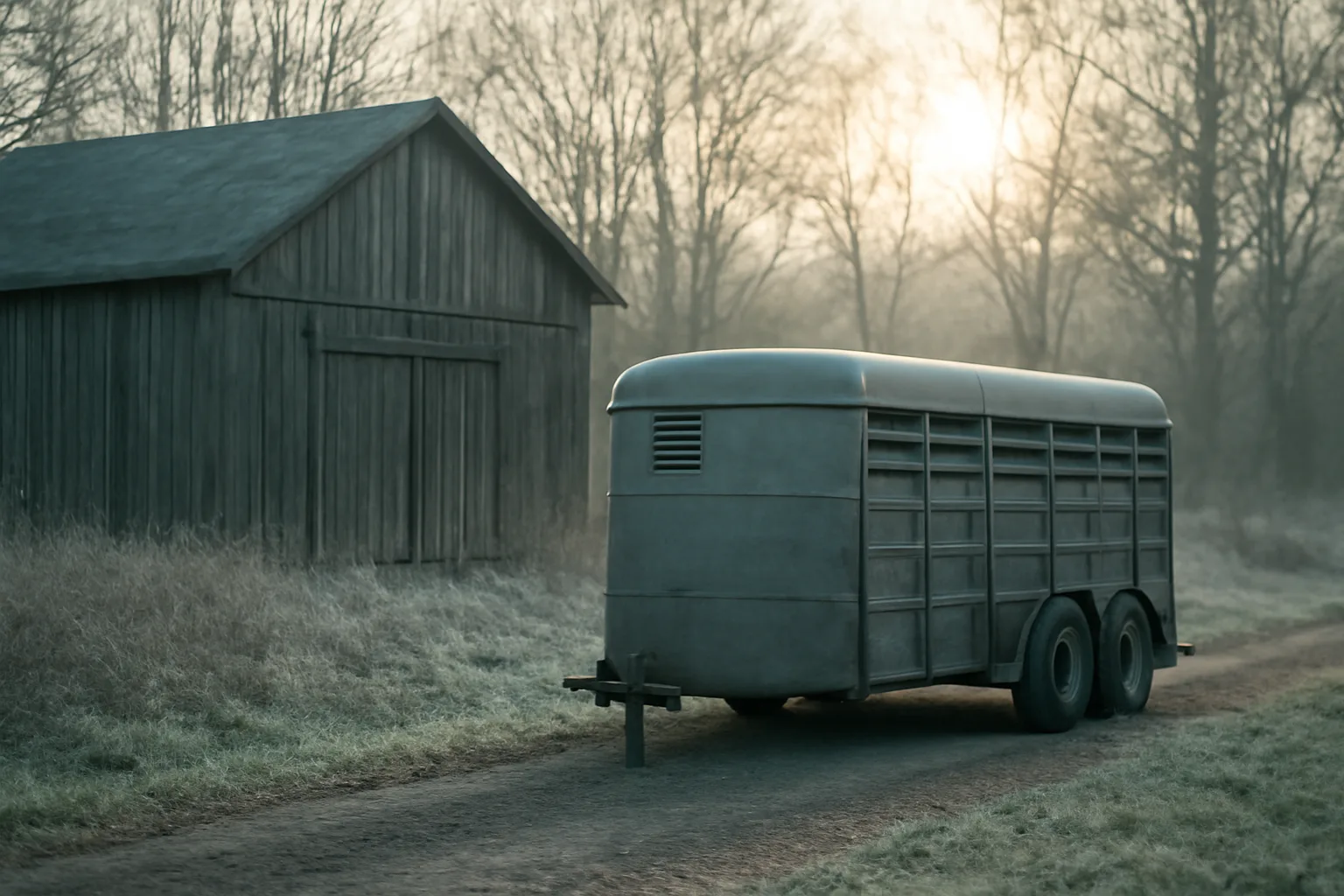
TL;DR
Delaware issues no single livestock hauler license. For-hire interstate work generally needs a USDOT number, MC authority, insurance filings, UCR, a Delaware business license, and usually a CDL at federal weight triggers. Health papers still ride with the animals. Confirm current fees and forms with FMCSA, Delaware DMV, Revenue, and DDA. No agency promises a start date.
Do you need a license for livestock hauler in Delaware?
You need a stack of numbers and cards, not one Delaware livestock hauler badge. For-hire interstate work generally means a USDOT number, motor carrier operating authority, proof of public liability on file with FMCSA, Unified Carrier Registration, a Delaware business license, and a CDL once the truck and trailer hit federal weight triggers. Confirm each item with the agency that issues it.
There is no standalone Delaware Department of Agriculture hauler license that replaces that stack. Some western brand-inspection states sell a livestock hauler or dealer card. Delaware’s paper path does not work that way. Animal health still matters. Movement papers ride with the load. They are not a substitute for carrier authority.
FMCSA says you must have a USDOT number if you operate a commercial motor vehicle in interstate commerce that meets the agency’s weight, passenger, or hazmat tests. A livestock trailer behind a heavy pickup is often already in that world once you cross a state line for compensation. [1]
For-hire interstate property carriage also needs operating authority (an MC number) unless a true exemption applies to that haul. Livestock is property. Do not assume a farm story covers a paid haul for a neighbor’s cattle into Maryland. Read the exemption. Then call FMCSA or a transportation lawyer if the fact pattern is weird. [4]
Intrastate-only work inside Delaware’s borders is a narrower case. You may not need interstate MC authority if you truly never leave the state. Delaware is small. A lot of real livestock work crosses into Maryland or Pennsylvania before lunch. Treat “I will never leave Delaware” as a plan that fails on the first good phone call.
Farm CDL exceptions exist for certain operators hauling their own commodities in a limited air-mile radius. They are written for farmers, not for a new for-hire livestock hauler Delaware operators use to get paid. If someone else writes the check, plan on a CDL. [10]
Want to see how a bigger cattle state writes the same problem? The Texas start guide is a useful contrast (How to start a livestock hauler business in Texas). Different brand rules. Same federal floor.
What federal paper does a Delaware livestock hauler file first?
File identity first, authority second, insurance third. Get an EIN if you will bank or insure in a business name. Then file FMCSA Form MCS-150 for a USDOT number. The USDOT number itself does not carry an FMCSA application fee on the agency’s public fee schedule. Operating authority does. [15]
FMCSA lists a $300 fee for motor carrier operating authority on its registration fee schedule. That is the federal application charge, not insurance, not plates, not a lawyer. Confirm the live figure on that schedule before you pay. Fees get amended. [2]
For-hire interstate authority also needs a BOC-3 process-agent filing and an insurer’s BMC-91 or BMC-91X filing before FMCSA will make the authority active. You can submit the OP-1 and still sit idle if the insurer has not filed. Do not advertise “ready to haul” until the MC shows active and the insurance is actually on file.
49 CFR 383.3 states, “This part applies to every person who operates a commercial motor vehicle in interstate, foreign, or intrastate commerce and to all employers of such persons.” That is the CDL net. Delaware wrote matching commercial-driver rules in Title 21, Chapter 26. The state road test still happens at Delaware DMV. [10] [13]
After you begin interstate operations as a new motor carrier, you enter FMCSA’s New Entrant Safety Assurance Program. FMCSA says the agency or the State will conduct a safety audit of the new entrant’s operations within 12 months after the new entrant begins operations. Pass it. A failed audit can shut the USDOT number down. Nobody can honestly promise you the audit month. [9]
UCR is a separate annual registration for interstate carriers. The fee sits in fleet-size brackets and changes by year. Confirm the current bracket on the UCR plan before you treat any dollar figure as gospel.
A forms kit does not file this for you. If you want a paper checklist in one binder, StockHaulPath sells a $149 one-time USDA/DOT + COI Kit. You still send the real filings to FMCSA and your insurer.
How much does livestock hauler cost in Delaware?
The licenses are the cheap part. A used truck, a sound stock trailer, and liability insurance are the expensive part. Nobody publishes a clean public study of Delaware livestock hauler premiums. The closest hard number is the federal insurance floor, not a shop-rate quote.
On the paper side, budget at least the FMCSA $300 operating-authority fee if you need an MC number, plus UCR at the current small-fleet bracket, plus Delaware’s business license under Title 30, plus CDL testing and issuance at whatever Delaware DMV is charging the week you sit. Confirm those state fees. There is no honest DMV cash-register total to quote here. [2] [8] [13]
Form a Delaware LLC and the Division of Corporations lists a $90 fee to file a certificate of formation. The LLC annual tax in 6 Del. C. § 18-1107 is $300. An EIN from IRS is free. You do not need an LLC to haul. You may want one if a lender or insurer asks. Paying a mill $1,500 to file a $90 certificate is a waste. [6] [7]
49 CFR 387.9 sets a $750,000 public liability minimum for for-hire nonhazardous property hauled in a vehicle with a GVWR of 10,001 pounds or more. Many shippers and brokers still ask for $1 million. That extra limit is a contract problem, not a secret Delaware statute. Physical damage on the truck is optional in the federal rules and mandatory in real life if you borrowed money to buy the truck. [3]
Equipment is a local market. A gooseneck stock trailer behind a dually is how a lot of first-year operators start. A pot-belly tractor-trailer is a different balance sheet. There is no “typical Delaware trailer price” worth trusting. Walk a dealer lot. Get a mechanic on a used pot before you wire money.
First-year cash also includes fuel, tolls on I-95 if you are silly enough to take cattle that way without a reason, vet-issued CVIs (the shipper often pays the vet, not you), scale tickets, and downtime when a load cancels. Keep a cash reserve equal to at least a few slow weeks. More if the truck is financed.
Want a side-by-side of how another state nickels the same pile? See the Tennessee cost breakdown (Livestock hauler cost in Tennessee: licenses, fees, and first-year budget). Same federal floor. Different state add-ons.
| Cost bucket | Hard number or honest range | Confirm with |
|---|---|---|
| Federal MC authority application | $300 on FMCSA’s fee schedule | FMCSA registration fee schedule [2] |
| USDOT number | No FMCSA application fee listed | FMCSA MCS-150 page [15] |
| Public liability floor | $750,000 (non-HM for-hire property, 10,001 lb GVWR+) | 49 CFR 387.9 [3] |
| Delaware LLC certificate of formation | $90 | Division of Corporations fee page [6] |
| Delaware LLC annual tax | $300 | 6 Del. C. § 18-1107 [7] |
| DE business license and GRT | Activity class and rate vary | Division of Revenue / Title 30 [8] |
| UCR, IFTA, IRP, CDL, insurance, truck | Variable, do not budget from a blog | UCR plan, DMV, your insurer |
How long does livestock hauler take in Delaware?
There is no official livestock-hauler Delaware processing clock. Anyone who sells you a guaranteed start date is guessing. The paper you control can move in days. The paper other people control (insurer filings, a CDL skills-test slot, a trailer that actually holds air) can sit for weeks.
An EIN is often same-session online. A Delaware LLC filing is frequently quick compared with slower states, but “frequently” is not a promise. Confirm current Division of Corporations processing with the Division. USDOT registration through FMCSA’s system is often immediate once the MCS-150 is accepted. Authority stays pending until BOC-3 and insurance land. [6] [15] [4]
Already hold a Class A CDL and a current medical examiner’s certificate? The long pole is usually insurance underwriting plus waiting for FMCSA to show the MC as active. No CDL yet? That is the long pole. Practice, knowledge tests, a skills test, and a medical exam do not happen on a Saturday dare. Delaware DMV sets the appointment rules. Confirm them. [13]
The new-entrant clock is separate. FMCSA’s program language puts the safety audit inside the first 12 months after you begin operations. That is an after-you-start event, not a permit you wait on. Build a binder from day one: driver files, maintenance, drug and alcohol program if you have CDL drivers, and proof of the insurance that is already on file. [9]
Equipment delivery can beat or wreck any paper timeline. A wrecked divider gate is a longer delay than a $300 filing. Do not quit a paycheck until the truck is inspected, the authority is active, and a real insurer has bound the policy.
Do you need a CDL to haul livestock in Delaware?
Most for-hire livestock haulers need a CDL. The trigger is the vehicle, not the cows. A combination with a GCWR of 26,001 pounds or more, where the trailer is heavier than 10,000 pounds, is Class A territory under the federal scheme Delaware adopted in Title 21, Chapter 26. Plenty of one-ton pickups and gooseneck stock trailers sit over that line once you add animals and water. [13]
A straight truck under 26,001 pounds GVWR can fall outside CDL if you are not towing a heavy trailer and you are not in another CDL class. Weigh the actual truck. Do not trust a forum post about “farm plates mean no CDL.”
49 CFR 383.3 is where the farm-vehicle exceptions live. They are narrow. They generally aim at farm vehicle drivers moving the farm’s own products in a set air-mile radius, with extra limits if the vehicle is articulated or very heavy. Paid hauls for other people’s livestock are not a farm exception. If you think you fit, read the section and ask Delaware DMV in writing. [10]
You also need a valid Medical Examiner’s Certificate from an examiner on FMCSA’s National Registry if you are in CDL interstate work. The physical is a private-pay exam. The state does not set that doctor’s price.
Take the skills test in a truck that matches the class you want. Showing up in a pickup when you plan to run a pot later is how people get restricted licenses they did not mean to get. Confirm vehicle requirements with DMV before you book the pad.
Other states write CDL-plus-hauler cards on top of this. Alabama’s license path is a fair comparison if you run south (livestock hauler license in Alabama). Delaware still starts with the CDL.
What insurance limits apply to a Delaware livestock hauler?
Federal public liability is the floor. 49 CFR 387.9 sets $750,000 for for-hire nonhazardous property in a vehicle with a GVWR of 10,001 pounds or more. Livestock sits in that bucket unless you also haul a listed hazardous material, which you should not do for fun. [3]
That filing has to reach FMCSA. A paper certificate in your kitchen drawer does not activate an MC number. The insurer or its filing agent sends BMC-91 or BMC-91X. If they drag their feet, you wait. Do not bind a cheap policy from a writer who has never filed BMC-91X.
Cargo insurance is mostly a contract problem for livestock, not a federal BMC-34 household-goods problem. Some owners want named-peril livestock coverage. Some integrators on the Peninsula put you on their certificate terms. Read the haul agreement. A $750,000 liability policy does not pay for a downer steer that was sick before you loaded.
Have employees who need CDLs? Federal drug and alcohol testing rules come with the job. Workers’ compensation is a Delaware employment question, not an FMCSA form. Confirm with the Delaware Department of Labor if you will have W-2 drivers.
Premiums move with your record, radius, trailer type, and whether you haul horses, cull cows, or birds. There is no honest statewide average to cite here. Get three quotes before you buy a truck you cannot insure.
What animal health papers belong on a Delaware livestock truck?
Carrier authority does not move the animals. Health rules do. Interstate movement of covered livestock is an Animal Disease Traceability problem under 9 CFR Part 86. Official identification and an interstate certificate of veterinary inspection are the normal pattern for many classes of cattle and other covered animals. The shipper and the accredited veterinarian issue the ICVI. You still need a copy in the cab when a state inspector asks. [11]
Confirm Delaware entry and exit rules with the Delaware Department of Agriculture, Poultry and Animal Health, before the first out-of-state pickup. Those rules change with disease traces. A blog date stamp is not an import permit.
Federal law also limits how long you can keep animals on a vehicle without rest. 49 U.S.C. § 80502 says a covered carrier “may not confine animals in a vehicle or vessel for more than 28 consecutive hours without unloading the animals for feeding, water, and rest.” Owners can request an extension to 36 hours in writing. Build routes that make that statute easy to obey. [5]
Poultry on Delmarva is its own trade. Broiler complexes run biosecurity stricter than a Saturday cattle sale. Integrator manuals, downtime between farms, and cleaned crates matter more than a pretty MC letter. If birds are your plan, talk to the complex before you buy a cattle pot.
Horses, show stock, and 4-H trailers look casual until you cross a line for pay. Paid interstate horse hauling is still motor carriage. Coggins and state equine rules stack on top. Confirm. Do not guess from a Facebook group.
How do IFTA, IRP, and UCR work if you leave Delaware?
Crossing into Maryland is interstate commerce. So is a run to New Holland. Once you are interstate in a qualifying CMV, UCR applies to the motor carrier. Pay the current fleet-size fee. Keep the receipt.
IFTA is the fuel-tax compact. Delaware wrote it into Title 30, Chapter 52, the Motor Carriers Fuel Purchase Law. If you run a qualified motor vehicle (generally a heavy truck in the 26,001-pound class, or three or more axles) across IFTA member jurisdictions, you need an IFTA license and decals, then quarterly fuel reports. Confirm whether your exact truck is a qualified motor vehicle with Delaware DMV before you skip it. [14]
IRP apportioned plates apply when a qualified vehicle operates in two or more IRP jurisdictions. A Delaware farm plate is not a magic interstate apportioned plate. If you will run a heavy combination out of state on a regular basis, ask DMV IRP how they want that truck plated. Do not take a first load to Pennsylvania on a story about farm tags.
Cab cards, IFTA decals, the UCR receipt, the MCS-90 endorsement page, and the medical card belong in the truck. Inspectors do not care that the paperwork is “in the office.”
Texas writes a heavier IRP conversation because the miles are longer (Livestock hauler license in Texas: the real paper path). The compact rules are still the same idea.
What business filings does Delaware want besides FMCSA?
Delaware wants a state business license if your activity sits in Title 30, Chapter 23. That chapter is a long list of occupations and license taxes. Trucking gets classified by how Division of Revenue reads your work, not by what you call yourself on Instagram. File the application and ask Revenue which category they want. Then pay the license tax and watch gross receipts tax if your activity is taxable. Nobody can invent your class or the current dollar fee for you. [8]
An LLC is optional. The formation fee is $90 and the annual tax is $300 if you go that route. Sole proprietors still get an EIN if a bank or insurer wants one. Foreign entities that already exist in Maryland or Pennsylvania and then base a truck in Delaware have registration questions with both Revenue and the Division of Corporations. Confirm. [6] [7]
Local county or city licenses are hit or miss. A yard with trucks in an incorporated town can trigger zoning before it triggers FMCSA. Call zoning before you park a pot belly beside a house.
Sales tax on a trailer purchase is a Delaware DMV and Division of Revenue problem at the time of title. Budget it. Do not discover it at the tag window.
Hire drivers and you add withholding, unemployment, and the CDL drug-testing program. That is when the “side hustle” becomes a company. I’d rather stay owner-operator for year one unless a contract truly needs a second truck.
What does first-year livestock hauling actually look like in Delaware?
Delmarva is poultry first and everything else second. Cattle, sheep, goats, and horses move, just not at broiler volume. A first-year operator often lives on short paid hauls: sale barns, farm-to-farm, a packer, a private treaty load into Pennsylvania or Maryland. The miles are short. The wait time at the chute is not.
Hours-of-service rules still exist. 49 CFR 395.1 has agricultural-commodity exceptions that can apply during a state’s declared planting and harvesting period when you are inside the air-mile limits in that section. Livestock can qualify as an agricultural commodity in FMCSA’s use of that term. The exception is not a blank weekend off. Read 395.1(k) and confirm Delaware’s current declared period on FMCSA’s state list before you throw the logbook out the window. [12]
Some livestock operations also sit outside the ELD mandate under FMCSA’s livestock and related exceptions. Brokers still ask for ELD printouts because their shipper packet is copied from dry van. Keep paper logs clean even when an ELD is not required. An inspector can still ask how long you have been on duty.
Deadstock, non-ambulatory animals, and overloaded compartments are how people get their name on a bad list. The 28-hour statute is the federal rest rule. Common sense is denser than that. If a load is already down at the farm, it is not your job to make it walk. [5]
Cash flow is lumpy. Integrator poultry pay can be regular once you are on a list. Independent cattle hauls are feast or famine. I’d rather lease on to a carrier with cattle accounts for six months than burn savings on an empty MC number. Running under someone else’s authority is real work with less paper. You give up the customer.
California’s start path is a reminder that some states pile on extra carrier permits (how to start livestock hauler in California). Delaware’s extra pile is smaller. The federal pile is the same.
What is a waste of money when you start a livestock hauler in Delaware?
Do not buy chrome before you can bind insurance. Do not pay a national “authority package” a four-figure sum to type the same MCS-150 you can type. Do not wrap the trailer. Cows do not book graphics.
A wrecked pot with a cheap price is not a starter truck. Floors, welds, and gates matter more than a new paint job. Pay an independent inspector. Skip the auction if you cannot look underneath.
Do not form three LLCs and a holding company for one pickup. Delaware makes entity formation easy. That is how people create annual $300 bills they do not need. [7]
Do not haul the first load “to help a friend” across the Maryland line with no authority and a farm story. The fine and the out-of-service order cost more than the $300 filing you skipped. [2] [4]
Skip prepaid load boards that sell you dry-van freight. Livestock is a phone business and a reputation business. A general freight board will offer you a no-touch load to Ohio that your stock trailer cannot legally or sanely take.
Do buy a good flashlight, a sorting stick, spare dividers if the trailer takes them, and a habit of photographing the load at the chute. That is cheap risk control. It is not glamorous.
What should you confirm with the board before the first paid load?
Call the people who can park your truck. FMCSA for USDOT and MC status. Your insurer for the BMC-91X filing date. Delaware DMV for CDL class, medical card, IRP, and IFTA. Division of Revenue for the business license class. Delaware Department of Agriculture for the current animal-entry story on that species. UCR for the current fee bracket.
Print the MC status page the morning you dispatch. Print the insurance filing. Put the ICVI, the owner’s contact, and a load map in the same clipboard as the 28-hour clock. If a stop will blow 28 hours, change the stop. [5]
Confirm weight. A loaded stock trailer plus a dually is how people discover they needed a CDL last month. Use a scale, not a guess.
No article can promise approval or a go-live week. StockHaulPath is an independent publisher, not a law firm and not a filing service. If you want the kit of forms and COI prompts, it lives at /start. The agencies still decide.
Run south or west later? Read that state’s guide before the first booked mile. Arkansas is a different ag paper culture (how to start livestock hauler in Arkansas). So is Tennessee’s license write-up (Livestock hauler license in Tennessee: the real paper path). Delaware will still be your base state for IFTA if this is where the truck lives.
Frequently asked questions
Do you need a license for livestock hauler in Delaware?
You need several, not one state hauler card. For-hire interstate work typically means a USDOT number, MC authority, UCR, a Delaware business license, and a CDL if the combination hits federal weight triggers. DDA health papers still apply to the animals. Confirm the live list with FMCSA, DMV, Revenue, and DDA. Intrastate-only hauls can drop interstate authority if you truly never leave Delaware.
How much does livestock hauler cost in Delaware?
Paper is the small bill. FMCSA lists $300 for operating authority. A Delaware LLC filing is $90 plus a $300 annual tax if you form one. USDOT has no FMCSA application fee on the public schedule. Insurance, the truck, and the trailer dominate. Nobody publishes a solid Delaware livestock premium average. Confirm UCR, CDL, and Revenue license amounts with those offices.
How long does livestock hauler take in Delaware?
No agency publishes a guaranteed livestock-hauler start clock. EIN and USDOT can be fast. MC authority waits on BOC-3 and the insurer’s FMCSA filing. A first CDL from zero often takes longer than the federal forms. FMCSA’s new-entrant safety audit is slated within 12 months after you begin operations. Confirm current DMV test wait times. Do not quit a job on a blog timeline.
Does Delaware issue a livestock dealer or hauler card like some ag states?
Delaware does not run a widely used standalone livestock-hauler occupational license that replaces FMCSA authority. Your controlling paper is still USDOT, often an MC number, DMV credentials, a Title 30 business license, and animal-movement documents. Always ask DDA Animal Health whether your species or business model needs an extra state credential before you advertise.
Can I start a livestock hauler in Delaware with a pickup and stock trailer?
Yes, if the equipment is safe and the paper matches the weight and the commerce. Many first-year operators start that way. A loaded dually and gooseneck often crosses the Class A CDL line. Scale it. Interstate paid hauls still need carrier numbers. A farm tag does not erase FMCSA rules once you take money and cross a state line.
Do I need MC authority for a farm-to-farm haul that stays in Delaware?
True intrastate, not-for-hire movement of your own animals is a different fact pattern than for-hire carriage. Paid hauls inside Delaware may avoid interstate MC authority if you never enter interstate commerce. Delaware is small, so that fact pattern is fragile. When the load or the truck crosses a state line for compensation, plan on USDOT and authority unless a written exemption fits.
Is poultry hauling the same as cattle hauling in Delaware?
No. Delmarva broiler work is usually integrator-controlled, with biosecurity, crate handling, and downtime rules that cattle sale-barn work does not use. Federal carrier paper can look similar. The customer packet does not. Talk to the complex before you buy a cattle pot for birds. Disease events can shut poultry movement overnight.
What is the 28-hour law for livestock trucks?
49 U.S.C. § 80502 limits how long a covered carrier may confine animals in a vehicle without unloading them for feed, water, and rest. The statute’s main figure is 28 consecutive hours, with a possible written extension to 36 hours. Plan fuel, traffic, and plant hours around that clock. It is a federal animal-transport rule, not a Delaware DMV form.
Do livestock haulers in Delaware have to use ELDs?
FMCSA has livestock-related ELD exceptions, and 49 CFR 395.1 also has agricultural-commodity hours exceptions inside stated air miles during a state’s declared planting and harvesting period. Brokers still ask for electronic logs. Confirm the exception that fits that truck and that load before you run paper only. Keep accurate duty status either way.
What insurance limit does FMCSA require for livestock?
49 CFR 387.9 sets $750,000 public liability for for-hire nonhazardous property in vehicles with a GVWR of 10,001 pounds or more. Livestock normally uses that floor. Shippers often ask for $1 million by contract. Cargo and livestock mortality coverage are separate decisions. The insurer must file proof with FMCSA before interstate authority goes active.
Can I run under another carrier’s authority instead of getting my own?
Yes. Leasing onto a carrier with cattle or poultry accounts skips the MC wait and puts you inside their insurance and new-entrant status. You give up the customer relationship and some rate. For a first year with one truck, that can be the less dumb path. Read the lease. Confirm who files the driver in the drug program.
Do I need IFTA and IRP for short trips into Maryland?
Short does not mean intrastate. Maryland is another jurisdiction. A qualified heavy vehicle that crosses the line generally needs IFTA under Delaware’s Motor Carriers Fuel Purchase Law and may need IRP apportioned registration. Confirm the exact weight and axle tests with Delaware DMV. UCR still applies to the interstate motor carrier even on short miles.
Is a Delaware LLC required to start hauling livestock?
No. Plenty of owner-operators run as sole proprietors with an EIN. A Delaware LLC certificate of formation is $90 and the annual tax is $300 if you want the entity. Form one if a lender, insurer, or partner asks, or if you want that liability box. Do not buy a multi-entity structure for a single pickup.
What happens after FMCSA grants new-entrant authority?
You enter the New Entrant Safety Assurance Program. FMCSA says the agency or the State conducts a safety audit within 12 months after you begin operations. Keep driver qualification files, maintenance records, and hours records ready. A failed audit can put the USDOT number out of service. Passing it is your real first-year exam, not the $300 filing.
Sources
- FMCSA, Do I Need a USDOT Number: Operators of qualifying CMVs in interstate commerce must obtain a USDOT number.
- FMCSA, Registration Fee Schedule: FMCSA lists a $300 fee for motor carrier operating authority applications.
- 49 CFR 387.9, Financial responsibility minimums: For-hire nonhazardous property in a vehicle with GVWR of 10,001 pounds or more requires $750,000 public liability.
- FMCSA, Operating Authority: For-hire interstate motor carriers generally need FMCSA operating authority (MC number) in addition to a USDOT number.
- 49 U.S.C. § 80502, Twenty-Eight Hour Law: Covered carriers may not confine animals in a vehicle more than 28 consecutive hours without unloading for feed, water, and rest.
- Delaware Division of Corporations, Fee Schedule: Delaware lists a $90 fee to file a limited liability company certificate of formation.
- 6 Del. C. § 18-1107, LLC annual tax: Delaware limited liability companies pay an annual tax of $300 under the LLC Act.
- FMCSA, New Entrant Safety Assurance Program: FMCSA or the State conducts a new-entrant safety audit within 12 months after the carrier begins operations.
- 49 CFR 383.3, CDL applicability and exceptions: Federal CDL rules apply to CMV operators in interstate and intrastate commerce, with listed farm-vehicle exceptions.
- 9 CFR Part 86, Animal Disease Traceability: Covered livestock moving interstate are subject to official identification and ICVI requirements under APHIS ADT rules.
- 49 CFR 395.1, Hours of service exceptions: Agricultural-commodity hours-of-service exceptions apply during a state's declared planting and harvesting period within the section's air-mile limits.
- 21 Del. C. Chapter 26, Commercial Driver Licenses: Delaware adopts commercial driver license standards for operators of commercial motor vehicles.
- 30 Del. C. Chapter 52, Motor Carriers Fuel Purchase Law: Delaware implements IFTA-style motor-carrier fuel tax licensing and reporting for qualified motor vehicles.
- FMCSA, Form MCS-150 and Instructions: Motor carriers obtain and update a USDOT number by filing Form MCS-150.